A Heart to Heart with St. Thérèse of Lisieux

This is my monthly column for Catholicmom.com

* * * * * * * * * * * * * * * * * * * * * * * * * * * * * * * * *

There is a saint for each of us, who understands our inner selves.

What would it be like to have a heart to heart with your favorite saint?

Recently I was looking for a saint. Not one to pray to necessarily but one to relate to. I wanted to read about someone who was a homebody like me. Someone who was quiet, who, from all outward appearances, didn’t accomplish big things. Someone who was overly sensitive at one time, easily hurt, scrupulous. I needed a “heart-to-heart” with that saint.

I had had a hard month. At God’s invitation I had offered to chair a group of women who put on a diocesan women’s conference every other year. Leadership was never a good fit for me but God had asked so I said I would. Although the conference went off without a hitch, there were many snafus and near disasters in the weeks before the event. I took my responsibility as chair very seriously and chastised myself for incompetence. By the day of the conference I felt like a bloodied, defeated warrior. I knew I was being overly scrupulous but I could not stop myself. Could I find a saint who had felt that way too?

I found her in Saint Thérèse of Lisieux.

st. thereseSt. Thérèse was not new to me. Several years ago I was introduced to her through a parish mission. The teacher, Sr. Debra-Thérèse Carroll, CTC, took on the persona of Thérèse and told the story of her life as documented in her autobiography, Story of a Soul.

I was captivated. Never before had I heard of such a path to holiness. As Sr. Debra spoke I could imagine St Thérèse speaking with her small, childlike voice.

For the first time, the path to sainthood looked doable for the average person.
And desirable.

It was my introduction to faithfulness to the smallest things and the sacred nature of the mundane. After that mission Thérèse became a part of my prayer life.

That was fifteen years ago and I had fallen into forgetfulness. Now I felt a prompt to remember. I pulled out an old copy of Story of a Soul and started reading it. I had tried reading the book several times before but couldn’t relate to it. This time as I read I could feel the consolation. She did indeed write about scruples, saying once of herself,

It was during the retreat before my second Communion that I was attacked by the terrible disease of scruples. One must have passed through this martyrdom to understand it. It would be quite impossible for me to tell you what I suffered for nearly two years. All my thoughts and actions, even the simplest, were a source of trouble and anguish to me; I had no peace till I had told Marie everything, and this was most painful, since I imagined I was obliged to tell absolutely all my thoughts, even the most extravagant. As soon as I had unburdened myself I felt a momentary peace, but it passed like a flash, and my martyrdom began again. Many an occasion for patience did I provide for my dear sister.

There was something so comforting in reading this passage.

A great saint, a doctor of the Church had gone through what I was going through
and legitimized it by called it suffering.

Scruples is self-inflicted, but that doesn’t make it hurt any less.

st. therese story of a soulBetter yet, Thérèse wrote about how the Lord healed her of this suffering:

My extreme sensitiveness made me almost unbearable. All arguments were useless. I simply could not correct myself of this miserable fault. How, then, could I hope soon to be admitted to the Carmel? A miracle on a small scale was needed to give me strength of character all at once, and God worked this long-desired miracle on Christmas Day, 1886.

On that blessed night the sweet Infant Jesus, scarce an hour old, filled the darkness of my soul with floods of light. By becoming weak and little, for love of me, He made me strong and brave; He put His own weapons into my hands, so that I went from victory to victory, beginning, if I may say so, “to run as a giant.”[1] The fountain of my tears was dried up, and from that time they flowed neither easily nor often.

I realized that I too had received such a grace.

The day after the conference I decided to not to go to Mass at my own parish. Feeling exposed and raw, I didn’t want to run into anyone I knew. There was a church nearby; our former associate, Father Steve, was now the pastor.

No one celebrates the liturgy quite like Father Steve. His reverence, love and knowledge of each and every ritual raise the celebration to a high art form. His church is a beautiful old cathedral, frescos on the walls, statutes of saints surrounding the sanctuary, and a statue of St. Thérèse in the corner, holding a bouquet of roses. The words spoken and the music sung reverberate throughout. Father Steve is the curator of a large collection of first class relics which are displayed in the side chapel. Six of those relics were set on the altar, each with a blue votive candle.

holy family

The sight of those saints caused tears to flow and they kept up, on and off, throughout the Mass.

During the Lamb of God, Fr. Steve broke the bread slowly, deliberately, and when he dropped the smallest piece into the chalice it seemed to fall in slow motion. The broken body of my Savior sprang to mind and the full meaning of His sacrifice for me washed over me.

By the time the mass was over, I had been cleansed of my scruples.

I too received a grace, just like Thérèse, to overcome this fault.

St. Thérèse is now my constant companion. How wonderful that our Church provides us with these saints that we can not only pray to for intercession but that we can walk with, relate to, and learn from.

There is a saint for each one of us. Who is your special saint and how has he or she walked with you?

Click to Tweet & Share: Did saints feel what we feel? A Heart to Heart with St. Thérèse of Lisieux http://wp.me/p2D9hg-xq

Would you like to learn along with Susan how to live your life
in single flow?
Send an email to susanwbailey@gmail.com
to subscribe, and never miss a post!
Follow Susan on Facebook and Twitter
Listen to Susan’s music Read Susan’s blog, Louisa May Alcott is My Passion

Preparing for Christmas: Veni Veni Emmanuel

Click to Tweet & Share: Preparing for Christmas: Veni Veni Emmanuel http://wp.me/p2D9hg-xm

Would you like to learn along with Susan how to live your life
in single flow?
Send an email to susanwbailey@gmail.com
to subscribe, and never miss a post!
Follow Susan on Facebook and Twitter
Listen to Susan’s music Read Susan’s blog, Louisa May Alcott is My Passion

For millennials and boomers alike: Waiting was never this good! “The In-Between” by Jeff Goins

The-In-Between_KDJeff Goins is an old soul in a young body. How else can I explain his wisdom? One would think his latest book, The In-Between: Embracing the Tension Between Now and the Next Big Thing would be geared towards millennials, people his own age. Yet I found myself relating just as easily to it. And I am old enough to be Jeff Goins’ mother.

The waiting game

Using stories from his own life, Goins tackles an interesting problem that we all face in our daily lives: what do we do with that time of limbo, when we’re suspended in midair either waiting to fly away or waiting to fall? This waiting, as he calls it, requires that we examine the breakneck pace of our lives, filled with to-do lists, running here and there, jammed to the gills but never satisfying our deepest longings.

“Slow down, you move too fast …”

Goins writes, “Waiting is the great grace. It’s a subtle sign for those with eyes to see, reminding us there is work yet to be done—not just around us, but in us.” Waiting requires slowing down and stopping, taking the time to examine our inner selves, and allowing for the development of that third eye, the one that reads between the lines and sees the value in the small stuff.

The waiting hot button

jeff goinsGoins admits that he is terrible at waiting (but who actually is good at it?). I had to smile at his multi-tasking example: opening his laptop to check his email, surfing the web while waiting for messages to load, checking Twitter because heaven forbid a single second should be wasted! The computer is the hot button when it comes to waiting: when that little circle goes round and round indicating a delay, I feel my impatience rising quickly. The technology we have today is so instant that waiting has become a lost art. I imagine many brains are scrambled like Goins’ thanks to TV and the internet.

Waiting hurts

Waiting requires suffering and we don’t like to suffer. Goins maintains that it is in the waiting that the “good stuff” is revealed, the dreams, desires, lessons and revelations. If our lives are filled with noise and busyness in an attempt to avoid waiting, we’re going to miss the results.

“Light out wanderlust, head us out to sea …”

Goins had wanderlust and opted to satisfy it through travel. During his trip to Europe he felt a frantic need to fill every moment with sightseeing. It didn’t feel right to stand still for an instant and the result was exhaustion. One day while standing in line at the Accademia Gallery to see David, the masterpiece sculpture by Michelangelo, he and his two friends stepped out of line and stood against the wall, eventually sliding down to sit. Too tired to move, they stayed for hours in that position looking at the statue. It was then that Goins had an epiphany about the value of slowing down, of waiting. He was able to study the statue and recognize its beauty. His companions did the same. The statue spoke to them in ways it never could have had they remained in the line and rushed through.

It’s true!

Goins and his companions had made the mistake we all make—obsessing over more when actually less is better.

Two sides of emptying the nest

As a mother of a son and daughter around the same age as Goins, I very much appreciated chapter two when the author writes about going home to visit his parents. On winter break from college, he chafes at the idea of spending time at home now that he has lived away on his own. Mothers especially tend to mourn their children leaving the nest, often for many years until finally, an acceptance settles in and the peace and quiet that ensues is welcomed. Visits home are a big deal and can be disappointing, even hurtful, if the child doesn’t want to be there. Goins helped this empty nester understand better what goes through the mind of that child, reminding me of how I felt in my twenties visiting my parents. It had never occurred to me that my son, visiting from another state, would be going through the same kinds of adjustments that his father and I were going through. Rather than moving on together, we remained stuck in time: he was the little kid and we were the parents. We weren’t allowing the relationship to evolve to the next level. Home is now a place he visits and that’s the way it should be. In reading chapter two, I felt like I was reading the minds of my children.

Creative journeys

I especially appreciated the chapters where Goins talks about his creative experiences, first as a musician, and then as a writer. He was telling my story. His evolution was mine. Goins’ blog, Jeff Goins, Writer, has been instrumental in helping me to embrace my vocation as a writer. He did in a few years what I did over a lifetime and he did that by recognizing early on the value of waiting, the value of reflection. He has allowed that third eye to develop and has encouraged that development and as a result, is able to dream and realize those dreams. This is a man who does not waste time and it’s not because he is filling every second with activity. It’s the recognition that life must have a chance to breathe.

Fear of marriage

Chapter five on his courtship with his wife was very enlightening as to how twentysomethings feel about marriage. Goins is a solid man with a deep faith in God and yet he was terrified of committing to marriage. There is no doubt that today’s world does not support commitment. There are too many choices and too many easy ways out. His experiences helped me as a mother better understand why my children feel the way they do about marriage despite the fact that my husband and I have been happily married for thirty-five years.

Sacred times

The final chapters about his grandfather and death proved beyond a shadow of a doubt that this guy is indeed an old soul in a young body. Death is foreign and terrifying today thanks to today’s medical advances. It was not that long ago that death was non-discriminating, hitting any age group. Today, young people have little experience with it, making it all the more frightening. Goins’ acceptance of the sacredness of dying and death demonstrates why he is a man of wisdom. His stories of his grandfather’s deathbed conversion and the two pillars of his church community, Lois and Al demonstrated a man who has learned to live in the present moment, appreciating what happens when it happens.

Heartily recommend

Waiting has taught Jeff Goins a great deal. The In-Between is a remarkable book written by a man wise beyond his years. It transcends generations and would make wonderful reading for millennials and their parents.

Click to Tweet & Share: For millennials and boomers alike: waiting was never this good! “The In-Between” by Jeff Goins http://wp.me/p2D9hg-xc

Would you like to learn along with Susan how to live your life
in single flow?
Send an email to susanwbailey@gmail.com
to subscribe, and never miss a post!
Follow Susan on Facebook and Twitter
Listen to Susan’s music Read Susan’s blog, Louisa May Alcott is My Passion

Gather Us In 2013 women’s conference a big success!

After two years of work by a small group of dedicated volunteers known as the Commission for Women of the Diocese of Worcester, MA, our biennial women’s conference, Gather Us In 2013 took place this past Saturday, November 2, and was a huge success! Over 350 women gathered on a beautiful autumn day at the DCU Center in Worcester to be inspired, to pray, to sing and to fellowship together.

The theme for the day was “Responding to our God of Creation, Redemption and Inspiration” and everyone was inspired by our keynote speakers: gospel singer and storyteller ValLimar Jansen and Catholic journalist, radio and EWTN TV host Teresa Tomeo.

Workshops by Sr. Bridget Haase, OSU, Peggy Patenaude and our prayer panel of Sr. Yvette Bellerose, Sr. Mary Ann Azana and Sr. Jurgita Sereikaite evoked laughter, tears and soothing prayer through the musical chant of Taizé.

Pictures speak a thousand words so we will let these photos help you relive the wonderful day and encourage all of you to attend the gatherings of women in our diocese and beyond, presented by the Commission for Women.

This slideshow requires JavaScript.

Click to Tweet & Share: Gather Us In 2013 women’s conference a big success! http://wp.me/p2D9hg-wy

Would you like to learn along with Susan how to live your life
in single flow?
Send an email to susanwbailey@gmail.com
to subscribe, and never miss a post!
Follow Susan on Facebook and Twitter
Listen to Susan’s music Read Susan’s blog, Louisa May Alcott is My Passion

Mother and daughter share their faith together at the Gather Us In 2013 women’s conference

With only one week left to register for the Gather Us In 2013 women’s conference, think about taking your daughter with you. Here is a story of a mother and daughter who are attending their third conference together. Several mothers and daughters are coming – join us in Worcester, MA on November 2nd.

From hot-shot anchor to a handmaid of the Lord: Gather Us In 2013 Keynoter Teresa Tomeo’s amazing journey

This is an inspiring story of a woman who knows what is most important. She is our afternoon keynote speaker at the Gather Us In 2013 women’s conference on Nov. 2. Only 1 week left to register – see the end of this post on how you can be a part of the action!

ValLimar Jansen: The power of the story – sharing the Gospel through word and song

I am really excited about this keynote speaker for our 2013 Gather Us In women’s conference set for November 2 at the DCU Center in Worcester. ValLimar Jansen is a powerful gospel singer and story teller, sure to inspire! There’s still time to register – see the end of the post for details.

Who are your teachers and what “study guides” do you have?

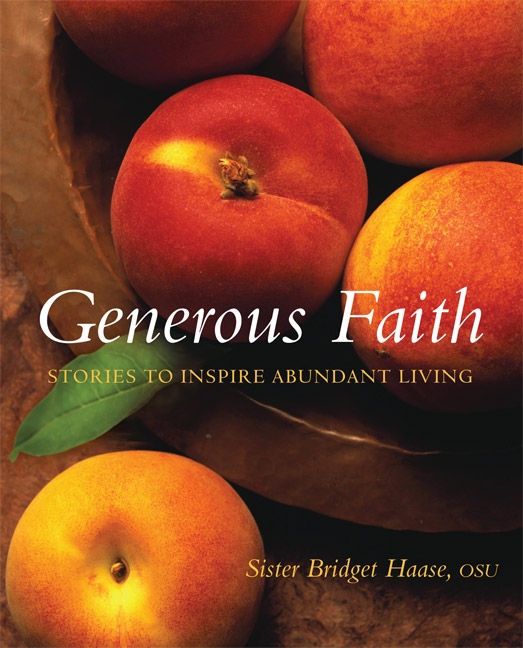
generous faithThis is what I read today in Generous Faith Stories to Inspire Abundant Living, a lovely book by Sr. Bridget Haase, OSU.

You remember Sr. Bridget. She’s the one I wrote about recently who is speaking at the Gather Us In 2013 women’s conference taking place on November 2. (see previous post).

She’s the one who has made it a habit to live life joyfully, fully, despite and because of what happens in her life.

from maninthemaze.blogspot.com

Her book today offered a quick little chapter about a young girl from Dog Lick Hollow in the hills of Appalachia. Ida Jean was in Sister’s third grade classroom. Her mother said the Ida Jean “hain’t learned nothin’” but as Sister was to discover, Ida Jean had a wealth of information, taught to her by Mother Nature:

“She could call trees by name and she knew when a ‘growin’ shower’ was coming by the feel of the wind on her face. She anticipated with tango gut would bloom in the hills and would gather it before it was gone. Ida Jean could smell a copperhead before she glimpsed it and also could tend a fire. She knew to plant potatoes in the dark of the moon and to cut her hair in the last quarter.”

Having learned a great deal from Mother Nature myself, I knew that Ida Jean had experienced learning from a great teacher.

So who are my teachers and what “study guides” do I have?

rich fishingIn random order:

  • Books.
  • Louisa May Alcott.
  • A long walk on a summer’s day.
  • Intimate conversations with my sister.
  • Listening to my brother on the phone.
  • A quick dinner with my daughter.
  • Prayers at different intervals throughout the day.
  • Writing.
  • A day spent at the Houghton Library at Harvard.
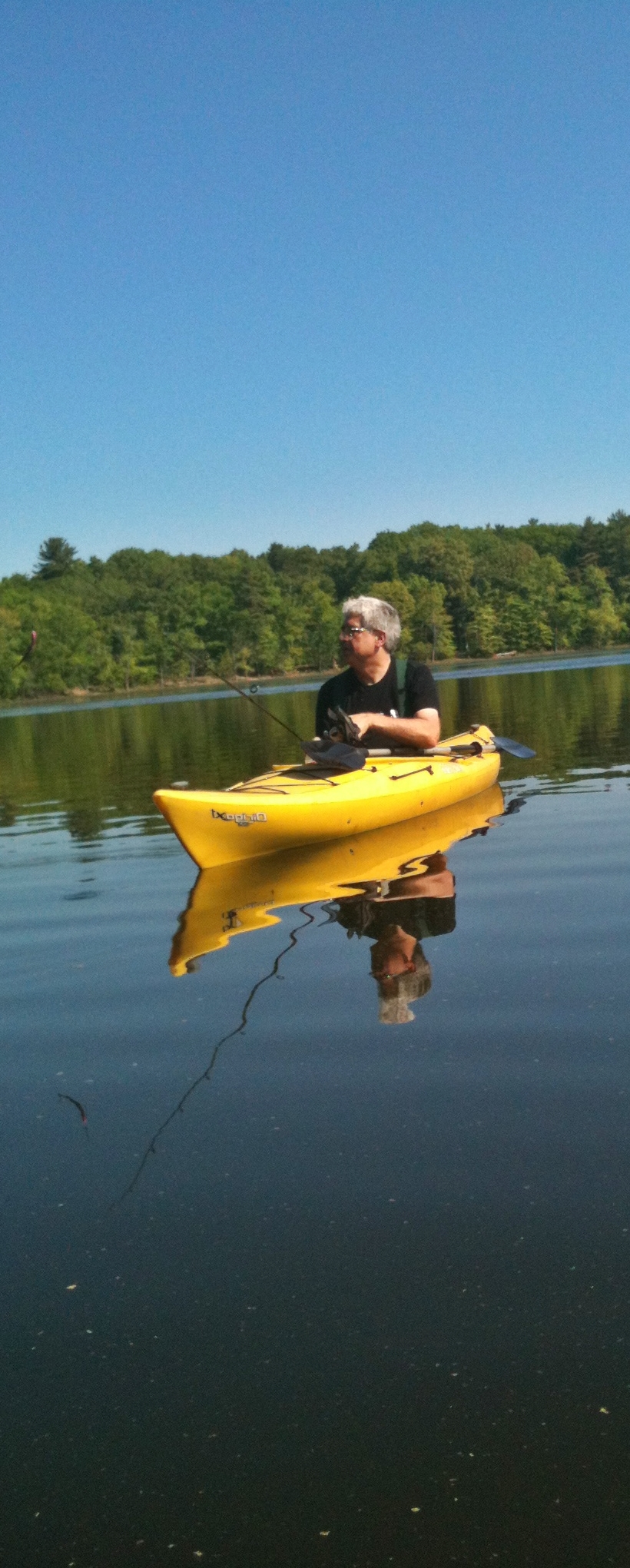
  • Drifting downstream in the kayak with Rich.
  • Aching feet.
  • Gazing at an icon.
  • Pondering the face of God.

Ida Jean grew in self-esteem teaching others the skill of reading clouds.

cloudsHer classmates understood the hidden wisdom.

Clouds present beautiful pictures in the sky, being whatever your imagination makes them out to be: puffy white cotton balls, streaks of gray smeared across the sky with an invisible piece of charcoal, deep yellow and orange clumps of sherbert reflecting a magnificent sunset. Clouds can be most entertaining while sitting in traffic. Clouds tell me when a storm is brewing, building tall towers of marshmallow into the sky. I know it’s time to turn on my wipers when I see the rain cloud touching the horizon, marching towards me

Joni Mitchell sang about clouds. She knew too they were teachers:

Just now while writing this post, my computer decided it was time to update itself. Bam, shutdown! I was not pleased. While I sat waiting for it to do its thing, I looked out the window and watched the leaves on the trees rustle in the wind. I imagined them as thousands of hands from the hosts of heaven, waving at me. I’m glad my computer shut down to give me the time to see that.

I have many teachers. I love being a student and I will be one for the rest of my life.

Who are your teachers? What are your “study guides”?

Click to Tweet & Share: Solace in the rose-colored candle: a prayer for the 26 Innocents of Newtown, CT http://wp.me/p2D9hg-kk

Would you like to learn along with Susan how to live your life
in single flow?
Send an email to susanwbailey@gmail.com
to subscribe, and never miss a post!
Follow Susan on Facebook and Twitter
Listen to Susan’s music Read Susan’s blog, Louisa May Alcott is My Passion

The Gift of Pain – guest post by The Holy Rover, Lori Erikson

Lori Erikson is an Episcopalian minister who writes a beautiful blog which I have featured here previously known as The Holy Rover. I would like to highlight her homily from Sunday, October 13, based upon the Gospel of St. Luke depicting the ten lepers begging Jesus for healing and the one who returns in gratitude.

This, however, is not a homily about gratitude but the story of a remarkable doctor, his discovery about leprosy and most importantly, what that discovery has to say about the value of pain.

* * * * * * * * * * * * * * * * * * * * * * * * * * * *

jesus as healerIn the Gospel reading this morning, we encounter the most feared, isolated, and vulnerable people in the Bible: lepers. Ten of them have been healed by Jesus, but only one comes back to give him thanks. We are meant to notice the fact that this man is a Samaritan, a member of a group considered to be social and religious outcasts by most Jews of the day. While the other nine rush off to begin their new lives, only one returns to express his gratitude to Jesus for the miraculous transformation he has undergone.

There are nearly 70 references to leprosy in the Bible, which is not surprising given the fact that it was the most dreaded disease in the ancient world. Biblical scholars say the term likely included a wide range of skin conditions, of which the most devastating was the illness that is now termed Hansen’s Disease. In Jesus’ day, this virulent bacterial infection not only crippled people’s bodies: it also robbed them of their home, family, community, livelihood, and dignity. Because of the contagious nature of the disease, a leper was cast out from society, reduced to begging for food and prohibited from participating in religious rituals. It is no wonder that lepers dogged Jesus’ steps, for once it became known that he was someone who could heal this deadly affliction, they must have flocked to him at every opportunity.

While leprosy has not been completely eradicated in the world, its terrors are greatly lessened because of advances in medical treatments. The story of how these breakthroughs were made is recounted in a fascinating book by physician Paul Brand. Published in 1993, it bears the seemingly contradictory title The Gift of Pain. I’d like to tell you about it today as kind modern-day parable of healing, one with surprising implications for our own lives.

Click here to read this post in full.

Click to Tweet & Share: The Gift of Pain – guest post by Lori Erikson @holyrover http://wp.me/p2D9hg-w0

Would you like to learn along with Susan how to live your life
in single flow?
Send an email to susanwbailey@gmail.com
to subscribe, and never miss a post!
Follow Susan on Facebook and Twitter
Listen to Susan’s music Read Susan’s blog, Louisa May Alcott is My Passion

When might compartments be necessary? Perhaps when you’re juggling two all-consuming passions?

from midwestmasters.wordpress.com

I’m in a pickle and I need your help.

I have two all-consuming passions right now and I’m trying to figure out what to do with them. It involves the writing of two books.

Dreamy summer

Since April I have been immersed in research for a book I want to write about Elizabeth Alcott, the one sister of that illustrious family who has never truly been fleshed out. I just spent one of the most meaningful summers in years, head buried in old books, Alcott letters and journals from the Houghton Library at Harvard, and biographies of the family. I’ve spent countless hours in
tetrasthe car during my long commute to work talking out my theories, struggling to assemble the puzzle and having no luck. Then one day, a line for a preface to the book came into my head out of nowhere and I scribbled the beginnings of the preface to the book. I poured over the preface for the next two weeks, watching the puzzle pieces fall neatly into place, as if I was playing Tetras. I sent the preface off to my editor and she wrote back saying she couldn’t wait to read the first chapter. I was elated.

I should have been burnt out but I wasn’t. I looked forward to many more months of the same.

Competition

And then, along came an opportunity. A professional opportunity that I could not turn down. But it’s a project that will require everything I have. I must pour myself into this project as I did with my Alcott project. This project, if accepted, could open many doors and teach me the trade in ways I could never have imagined.

Can’t bear to put it away

kayakLetting go of my first love has been difficult. The boat is full and still raring to go, but I had to push the boat away and dock it for a time. I can still see that boat off in the distance, calling to me.

Changing direction

But I must be a professional. I must attend to this present opportunity and give it the same passion as I gave to my Alcott project. Switching mindsets is like getting stuck in the mud, trying to lift the heavy foot out of the muck, cleaning it off, and setting it in a new direction. And both feet have to go.

Can I stick to my principles?

jugglingAnd then I started wondering: could I juggle both projects at once?  Would it require creating separate compartments in my mind and heart to house them? Isn’t compartmentalization the very thing I have been pushing away, trying instead to live in a single flow? Didn’t I start this public blog to hold myself accountable to that idea?

Now what?

I could really use your help on this. Please tell me if you have experienced this and how you dealt with it. If you know of a blog post, please share the link in the comments.

And I thank you!

Click to Tweet & Share: When might compartments be necessary? Perhaps when you’re juggling two all-consuming passions? http://wp.me/p2D9hg-vO

Would you like to learn along with Susan how to live your life
in single flow?
Send an email to susanwbailey@gmail.com
to subscribe, and never miss a post!
Follow Susan on Facebook and Twitter
Listen to Susan’s music Read Susan’s blog, Louisa May Alcott is My Passion