Solace in the rose-colored candle: a prayer for the 26 Innocents of Newtown, CT

Rejoice in the Lord always. I shall say it again: rejoice! So says Saint Paul in the fourth chapter of Philippians.

Each reading this third Sunday of Advent proclaimed joy:

Shout for joy, daughter Zion!
sing joyfully, Israel!
Be glad and exult with all your heart,
daughter Jerusalem! (Zephaniah 13:4)

Shout with exultation, City of Zion,
for great in your midst
is the Holy One of Israel! (Isaiah 12:6)
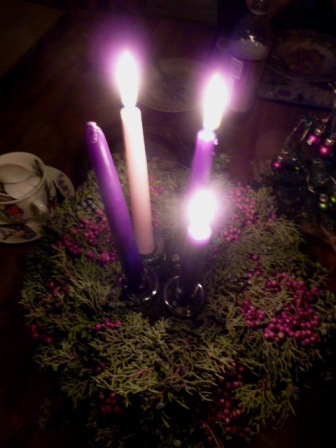
rose colored candle2Amidst a sea of somber purple, the rose-colored candle was lit on the Advent wreath; a sign of joyful expectation for the Lord’s coming as Christmas day draws near.

Yet why does my heart not rejoice? Why is it that a mist hangs heavily over so many?

We all know why. A modern version of the slaughter of the Holy Innocents took place that past Friday in an idyllic, close-knit Connecticut town.

It was senseless and cruel when Herod ordered the original deed in his irrational desire to destroy the Christ Child. The first chapter of Exodus described the Pharaoh’s heartless decree to drown infant boys in his quest to slay the baby Moses.

And it is just as incomprehensible, just as heart-wrenching now knowing those twenty precious little children between the ages of six and seven, and six courageous women died an equally terrible death. Watching their families and friends in Newtown, CT careen from terror to shock and finally, to a grief so deep that it feels bottomless casts a pall over a joyful holiday. There appears to be no consolation.

And yet we were called to be joyful this Gaudate Sunday. We are expected to celebrate Christmas morning with our families while others will have unopened presents under the tree and an empty space at the dinner table.

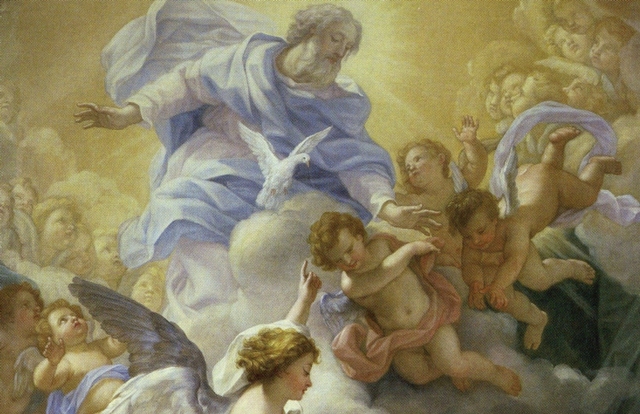
I try to picture the children and the heroic adults who attempted to save them in the arms of Jesus, hovering over their families like the angels they are, trying to impart some consolation.

Will their loved ones be able to know it? To feel it?
innocent-children

The Christian faith teaches us that God is nearest in those moments when we cannot find the words or process the feelings or even lift our heads in our grief.

I think of Jesus at the Garden of Gethsame, begging for consolation from His Heavenly Father and the angels coming to minister to Him. He knew His Father was listening and therefore could experience their consolation.

All those new angels in Heaven are waiting and ready to offer that same consolation to their grieving loved ones.

Jesus calls on us to be alert, awake and ready: prepared to see Him at any turn.

I dig deep to pray that these grieving people will be able to recognize God in their midst and thus experience the ministering presence of their angels who long to offer consolation.

rose colored candle singleGrief is an opportunity, a moment of supreme and sublime vulnerability. It can be a time of transformation if we allow ourselves to be carried on the journey. It is tumultuous, frightening and exceedingly painful. If we are open, we can find that joy that Saint Paul talks about beneath the hurt. Slowly, gently, this joy can be the healing balm.

The newest angels up in Heaven are ready and waiting to apply the balm. The rose-colored candle in the Advent wreath can be the sign of their consolation.

So I will pray these grieving parents, siblings and husbands will be ready to receive that consolation and I invite you to do the same.

Click to Tweet & Share: Solace in the rose-colored candle: a prayer for the 26 Innocents of Newtown, CT http://wp.me/p2D9hg-kk

Would you like to learn along with Susan how to live your life
in single flow?
Send an email to susanwbailey@gmail.com
to subscribe, and never miss a post!
Follow Susan on Facebook and Twitter
Listen to Susan’s music Read Susan’s blog, Louisa May Alcott is My Passion

There’s nothing better at Christmas than “It’s a Wonderful Life,” especially if it’s your story!

Last night I had a lot of cooking to do for a dinner party and kept myself company watching “It’s a Wonderful Life” on YouTube. This truly is a Christmas classic and I got all choked up at the end when the town turned out to help George Bailey. I was flooded with strong memories of a Christmas in 1997 when our family faced a similar situation. I’ll let my son Stephen tell the story:

its-a-wonderful-life-3

I’ve been extremely fortunate to have had close friendships with many of my teachers and college professors growing up. I’m generally the class wise guy and this has always guaranteed a lot of time conversing with the teacher, either in welcomed humorous banter or being kept after class for being disruptive while continuing an intellectual conversation on topics discussed in the class.

Of all of these teachers the one that first comes to mind is my sixth grade English teacher, Mrs. Bloom.

Mrs. Bloom recognized early on that I had a lot of creative energy to burn, and she encouraged this at every turn. She focused me on my written work and indulged my interest in humorous skits and videos for my class projects. I think she saw in me a kindred spirit of wild enthusiasm, something she brought every day to class with her own outsized personality and a sweet caring nature that she extended to all of her students. These two sides of her personality came out in full force the week before Christmas in 1997.

Earlier in the month, my family’s storage locker in the basement of our apartment building had been broken into. My parents, having to deal with two surprise-ruining children, had taken to storing all of the Christmas gifts in this locker to keep my sister and me from peeking at them. The thieves had crudely pried open the locker and made off with everything.

My family was devastated; we resigned ourselves to what would likely be a very low-key Christmas.

Somehow Mrs. Bloom found out what had happened. Being anything but a low-key personality, she was not the type of person to stand for anyone settling for less than the best.

I remember entering my sixth grade class the morning before the Christmas break without the sense that anything might happen that day. The sting of the theft was still something everyone in my family felt, a kind of weird shame that hung over us despite it being nothing we could have prevented.

I was greeted with the sight of my entire class clustered around Mrs. Bloom’s infamous treadmill. Having so much excess energy, Mrs. Bloom had the treadmill off in the corner near her desk and would take to running on it during lunch (or class, generally for humorous effect).

Today, the treadmill was piled high with wrapped gifts and surrounded by the smiling faces of my classmates.

nordic-track-commercial-2150-treadmill with giftsMrs. Bloom then explained how in the past week she had called and spoken with the parents and students of my class and in an act of kindness that has so far gone unmatched in my lifetime had organized all of them into this big act of charity for my family.

In a time of crisis, she had gone above and beyond her textbook role as an educator and brought together a small community of people to do good. This event has always stuck with me, and the lessons of kindness taught here have influenced my life ever since.

Do you have a “It’s a Wonderful Life” story of your own to share?

Click to Tweet & Share: There’s nothing better at Christmas than “It’s a Wonderful Life,”  especially if it’s your story! http://wp.me/p2D9hg-k4

Would you like to learn along with Susan how to live your life
in single flow?
Send an email to susanwbailey@gmail.com
to subscribe, and never miss a post!
Follow Susan on Facebook and Twitter
Listen to Susan’s music Read Susan’s blog, Louisa May Alcott is My Passion

When the Man Comes Around – guest post from The Holy Rover

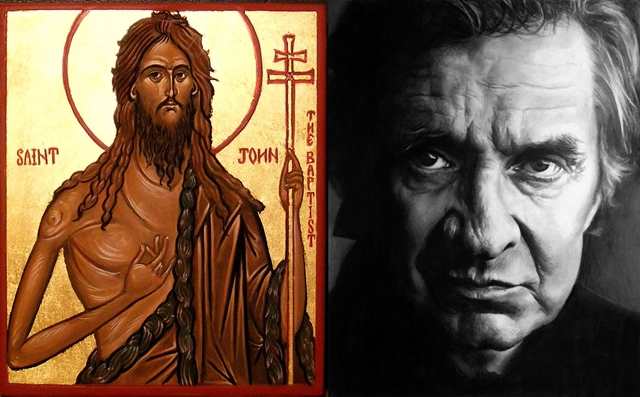
What do St. John the Baptist, the season of Advent and Johnny Cash have in common? You’d be surprised! Lori Erickson, from her Holy Rover blog, draws the parallel in this fascinating post:

For those of you out there who are churchy types, you know that we’re now in the season of Advent. While the rest of the world is singing Christmas carols and reveling in the sweetness of the season, the liturgical calendar focuses on the so-called Little Apocalypse (which warns of great tribulation to come) and John the Baptist (the person you least want to show up at your annual Christmas party, what with his poor grooming habits and fondness for “brood of vipers” metaphors). The reason for the somber tone is that in the church year, this is meant to be a time of waiting and repentence, a period meant to prepare ourselves for the coming of mystery.

john the baptist and johnny cash

Several years ago I was trying to find an example of how the message of John the Baptist might be interpreted in today’s idiom, and I kept coming back to Johnny Cash: the man in black, the sinner who found salvation, the singer with that exquisite, rough-hewn voice.  I remember that when he died a few years ago, there was a vivid line in an obituary for him–”It takes a sinner,” it said, “to see the blinding light of grace.”

Click here to read the rest of this post.

Click to Tweet & Share: What do John the Baptist, Advent and Johnny Cash have in common? Guest post from @holyrover http://wp.me/p2D9hg-jS

Would you like to learn along with Susan how to live your life
in single flow?
Send an email to susanwbailey@gmail.com
to subscribe, and never miss a post!
Follow Susan on Facebook and Twitter
Listen to Susan’s music Read Susan’s blog, Louisa May Alcott is My Passion

Lincoln’s melancholy – guest post from the Holy Rover

I’m sure many of you have already seen Steven Speilberg’s acclaimed “Lincoln.” I am eager to see it myself. My favorite part of American history is from the Civil War to the present, mainly because it is captured in photographs.

from http://www.spiritualtravels.info/wp-content/uploads/2012/11/061221225103_abraham_lincoln_lg1.jpg

Abraham Lincoln is a most compelling and thoughtful man. Lori, in her post, describes how his tendency towards depression from his melancholy nature created the man of character we so admire.

For much of my life I too was deposed towards melancholy fueled by an artist’s temperament. It took me many years to figure out the cause (and therapy, much of it useless) and now having that knowledge, I can say that my life is much calmer. The roller coaster ride has smoothed out into floating downstream.

Here’s a teaser to Lori’s post with a link to the rest. And let me know if you’ve seen “Lincoln” and what you think of it. Can’t wait to go myself!

You probably already know a quite a bit about Lincoln, but one aspect of his story may not be familiar to you. In particular, I want to tell you about a gift that Lincoln possessed, the gift of melancholy. Melancholy—which is related to what we would call depression—was both a blessing and a curse to Lincoln. I think the story of how he bore that affliction, and of how it deepened his character and faith, holds some lessons for us today.

Click here to continue.

Click to Tweet & Share: Lincoln’s melancholy – guest post from the Holy Rover http://wp.me/p2D9hg-jI

Would you like to learn along with Susan how to live your life
in single flow?
Send an email to susanwbailey@gmail.com
to subscribe, and never miss a post!
Follow Susan on Facebook and Twitter
Listen to Susan’s music Read Susan’s blog, Louisa May Alcott is My Passion
Cat Heaven

Cat lovers, this is for you!

My son alerted me to this website: 50 Amazing Photos from Cat Heaven.

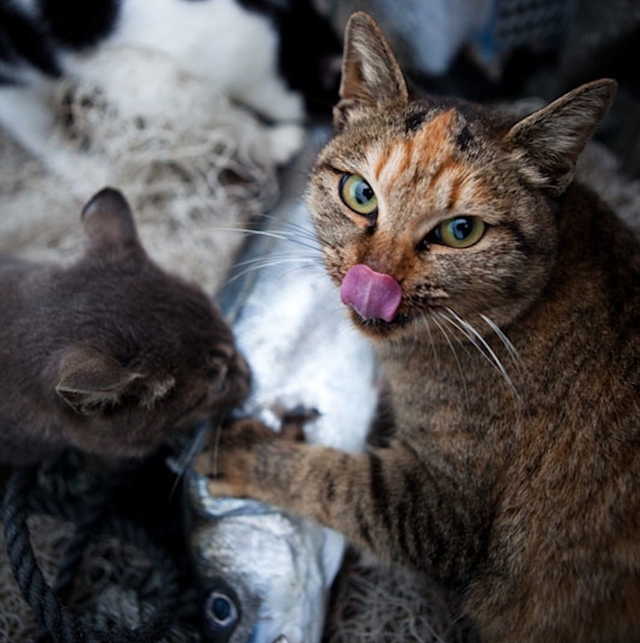
Here’s the story behind the photos, taken from the site: “Photographer Fubirai has spent the last five years documenting the lives of the semi-wild cats that roam the island in Fukuoka, Japan. The cats are fed by local fishermen and wander freely through the streets, boatyards, porches, and houses of the city. Heaven.”

Here’s an example of one photo. Be sure and visit 50 Amazing Photos from Cat Heaven for the rest.

from http://www.buzzfeed.com/summeranne/50-amazing-photos-from-cat-heaven-island-in-japan

Click to Tweet & Share: 50 Amazing Photos from Cat Heaven (I always said I wanted to be a cat!) http://wp.me/p2D9hg-jy

Would you like to learn along with Susan how to live your life
in single flow?
Send an email to susanwbailey@gmail.com
to subscribe, and never miss a post!
Follow Susan on Facebook and Twitter
Listen to Susan’s music Read Susan’s blog, Louisa May Alcott is My Passion

Thankful for simple gifts

This is a teaser to my monthly column on Catholicmom.com.

Some of the most wonderful gifts from God come in the form of whispers.

They are the small gifts. The gifts for a particular moment, not to be grasped at, but merely accepted. And if the taker is alert and awake, the heart will swell with gratitude.

On a Sunday not too long ago, I was the fortunate recipient of a bevy of such gifts.

First, a little background. For most of my life, I was a vocalist and songwriter …

The greatest joy as a vocalist was leading the singing at Sunday mass. My parish, St. Luke the Evangelist in Westborough, MA is a blessed community full of active, generous and loving people.

The church building is a minor cathedral, acoustically perfect with high concrete ceilings, carved pillars supporting graceful Corinthian arches, and shiny slate floors. Voices ring and linger in that sacred space.

Each Sunday I enjoyed the privilege of choosing the music and leading the congregation in prayer through song …

I led music for most of my adult life. In 2010, all that changed …

Click here to finish the post on Catholicmom.com. Feel free to post comments there.

Click to Tweet & Share: We live our lives in compartments; feeling disconnected. How about living life in a single flow? Where might it lead? http://wp.me/p2D9hg-x

Would you like to learn along with Susan how to live your life
in single flow?
Send an email to susanwbailey@gmail.com
to subscribe, and never miss a post!
Follow Susan on Facebook and Twitter
Listen to Susan’s music Read Susan’s blog, Louisa May Alcott is My Passion

The mystery of God is but a breath away …

I live in an East-West household.

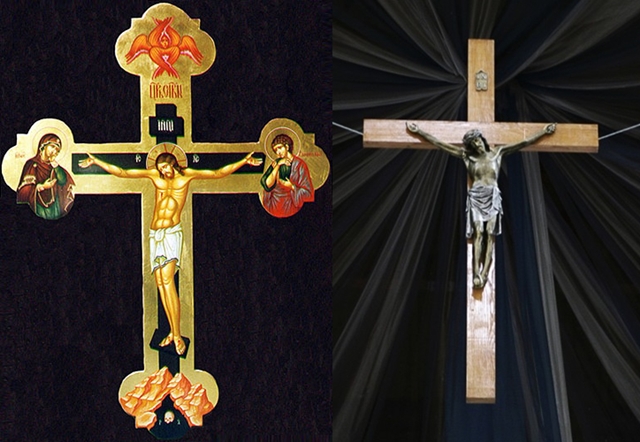
My husband represents the East as a deacon in the Eastern Catholic Melkite Church. The Eastern Catholic Churches celebrate the Byzantine liturgy with its many beautiful and meaningful rituals. Their sanctuaries are full of beautiful icons with gold backgrounds; they appear at times translucent, permitting the eye and the imagination to travel beyond this world to heavenly heights.

It’s the Orthodox tradition: experiential, sacramental, mystical, rich and deep.

I represent the West as a Roman Catholic. My home parish is a mini cathedral with carved pillars supporting graceful Corinthian arches. Light-filled and colorful, the stained glass windows tell stories of the Gospels through the rosary mysteries. Paintings of the stations of the cross line the walls, inviting one to prayer. And the golden tabernacle, holding the true presence of Christ in the host, is positioned in the place of honor at the front of the church, behind the altar.

I come from the Roman tradition, also sacramental, rich and deep, but based more on reason perhaps than experience.

I love living in an East-West household, receiving the benefits of Eastern thinking, augmenting, and softening perhaps my Western way of thought.

My husband and I share many lively discussions about our faith.

His conversion to the Eastern Catholic Church was one of the greatest gifts to our marriage.

I enjoy learning about his approach to faith and can do so readily through a website known as Ancient Faith Radio. One can listen 24/7 to beautiful Byzantine chant and learn from the many podcasts espousing Orthodox teaching.

My favorite is “Search the Scriptures,” hosted by Dr. Jeannie Constantinou, presenting “interesting and accessible bible study for busy people.” Dr. Jeannie, thanks to her vast education in a variety of settings, combines a passionate love for the Bible and Orthodox spirituality with her love of ancient history. She makes the pages and people of the Bible truly come alive.

Today she taught about Isaiah, chapter 6 which describes the prophet’s vision of heaven

It reminded me of why mystery is such a wonderful and freeing concept.

The first three verses of chapter 6 read as follows (New King James version):

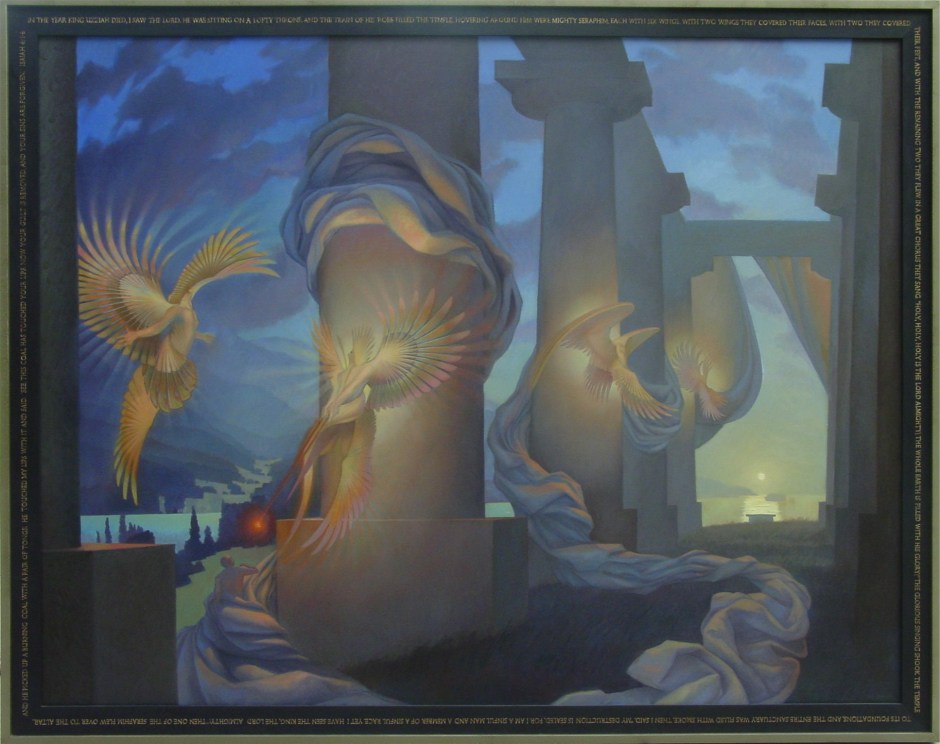
In the year that King Uzziah died, I saw the Lord sitting on a throne, high and lifted up, and the train of His robe filled the temple. Above it stood seraphim; each one had six wings: with two he covered his face, with two he covered his feet, and with two he flew. 3 And one cried to another and said:

“Holy, holy, holy is the Lord of hosts; The whole earth is full of His glory!”

The Vision of Isaiah by Luke Allsbrook

Dr. Jeannie went on to explain, citing her favorite Church Father St. John Chrysostom (aka, “The Golden Mouth), the impossibility of describing the nature and essence of God. As God is formless, there is no way to physically describe Him. Why even the seraphim are formless!

So how can Isaiah write this description of heaven?

Isaiah needed a way to convey the truth of what he saw in his vision: the utter majesty and glory of God. Even though seraphim are not known to have form, the traditional image is of an angel with wings (and in this case, six). By having the seraphim covering his face and feet with his wings, Isaiah is demonstrating how the being could not look upon the countenance of God, for His glory was too much for him. St. John Chrysostom goes on to explain the meaning of the feet being covered as well as the face, as a means of demonstrating the seraphim’s knowledge that he was a lowly creature in the sight of such magnificence.

Dr. Jeannie cited other parts of the Bible, including the Genesis creation story as similar examples of writers using human examples to describe the indescribable so as to convey important theological and spiritual truths.

Looking at the Bible that way, backed up by rich ancient history she provides, surely does make the pages and people come alive.

But the reason why I so enjoy hearing the Bible taught in this way, through the lens of Orthodoxy, is that it reminds me of the utter mystery of God.

Rather than trying to explain difficult concepts such as the Holy Trinity or the essence of God, how much more enjoyable, fruitful and freeing it is to just release the need to understand and go with the flow of the mystery, allowing it to sweep me along.

This, of course, requires a Guide (the Holy Spirit), thus I need to remain in prayer to continue the journey safely.

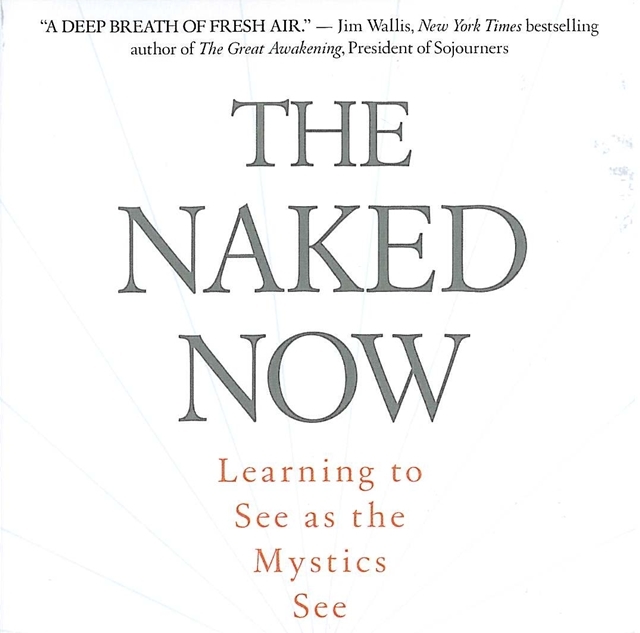
The book I cited in my last post, The Naked Now, presents a simple and profound way to remain in prayer at all times and it fits in perfectly with the indescribable magnificence of God.

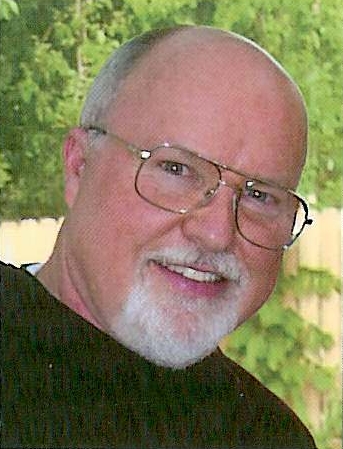
Author Richard Rohr

Richard Rohr, in talking about the name of God, said that word Yahweh (in Hebrew, YHVH) “was considered a literally unspeakable word … From God’s side the divine identity was kept mysterious and unavailable to the mind; when Moses asked for the divinity’s name, he got only the phrase that translates something to this effect: “I AM WHO AM … This is my name forever, this is my title for all generations.” (Exodus 3:14-15) (page 25, The Naked Now by Richard Rohr).

Rohr says the word was not spoken; no, it was breathed. The first and last thing we do each day, and at the beginning and end of life. The thing that we must do to live.

We breathe, thus speaking the unspeakable, over and over again.

Breathing and mystery … wonderful things to lose myself in today …

What is mysterious to you?

Join Susan Bailey’s Email List (special surprises just for you!)
to subscribe to this blog.

Follow Susan Bailey, Author, Speaker, Musician on Facebook and Twitter
Listen to Susan’s music Read Susan’s blog, Louisa May Alcott is My Passion

Finding the mystic in me

Today I started reading a book entitled The Naked Now by Richard Rohr. I originally planned on reading it because a group I belong to, the Commission of Women of the Diocese of Worcester, chose this book as the one they wished to study this year. A dear friend of mine, a deacon in the Catholic Church, had also highly recommended it.

Rohr aims to teach the reader to see as the mystics see.

I have long resisted the notion of being a mystic though this same friend insisted that I be open to the idea. The pragmatist in me, the one who is unimpressed with splashy theatrics and celebrity, would have nothing to do with it. I saw no connection between my earthly life and supposed “heavenly visions.” I mistakenly connected mysticism with crying statues; I wanted nothing to do with it.

However, the creative in me, now being regularly exercised with reading and study, began to speak up and say,

“Hold on a minute. Maybe there is more to this than meets the eye.”

And my inner self, also exercised daily with prayer and reflection, objected too.

The Naked Now is now affirming something I’ve been experiencing ever since I started all this exercising: this newfound ability to “read between the lines,” and it is growing exponentially.

Rohr spells out three ways to view the world through a simple example: how three people view a sunset. One simply enjoys the beauty, nothing more. A second enjoys the beauty and understands the science behind a sunset, giving him extra insight.

The third not only appreciates the beauty and perhaps the science, but also “tastes” the experience. His vision enables him to transcend the physical experience to something mystical.

Rohr calls this seeing with the “third eye.” And I knew exactly what he meant.

I experienced that kind of vision all summer long in my lunchtime walks through the woods, past streams and alongside the lake at Wellesley College. Some of these experiences were quite intense, most especially my kayak trip on Lake Waban.

And I had noticed this vision even before the summer.

Reading the Bible had always been a difficult and dry experience. I simply could not understand what it was trying to tell me. However, last year I began to experience a strange sensation while reading: my mind and my heart would be literally flooded with ideas and insights. It was thrilling and a little scary. It was like God was chattering at me!

I don’t remember when I began acquiring this “third eye” but I am guessing it is connected to a few newer habits in my life: challenging reading, journaling and blogging, and set times for prayer. (This blog is a result of those new habits.)

I allowed myself to be carried in the flow of God’s will, just like my kayak floats down river. I went with the flow and without realizing it, accepted an invitation from God to go deeper with my faith.

I didn’t really know what was happening but had a sense that it was better to just “go with it” rather than to question.

And now, I have a book that will explain what’s been happening.

And the best part is, you can experience this too.

Everyone is called to be a mystic. It’s what Jesus intended. It was not just for those saints we see commemorated in statues and prayer cards.

Jesus means for each of us to experience this “third eye,” a direct result of a close, intimate relationship with Him.

The closer we get, the better we see.

And that’s when life really starts to take off. Surrounded by and immersed fully in this Divine love, we can experience what Henri Nouwen wrote in that post I highlighted the other day, “It is in the heart of God that we can come to the full realisation of the unity of all that is, created and uncreated.”

We can Be As One.

You can find The Naked Now on Amazon. Treat yourself, and then tell me what you think!

Click to Tweet & Share: Could you be a mystic? Do you want to be?  I didn’t think I did until I found out I was one … http://wp.me/p2D9hg-iK

Would you like to learn along with Susan how to live your life
in single flow?
Send an email to susanwbailey@gmail.com
to subscribe, and never miss a post!
Follow Susan on Facebook and Twitter
Listen to Susan’s music Read Susan’s blog, Louisa May Alcott is My Passion
True unity that brings all things together

Unity in the Heart of God

“Love unites all, whether created or uncreated …”

This is the beginning of a short meditation by noted spiritual writer (and my favorite), Henri Nouwen.

You can read the rest here.

This short passage utterly sums up the purpose of this blog, and my life.

How about you? What sums up your life?

Click to Tweet & Share: True unity, as Henri Nouwen sees it. Sums up my life. How about yours? What sums up your life? http://wp.me/p2D9hg-iB

Would you like to learn along with Susan how to live your life
in single flow?
Send an email to susanwbailey@gmail.com
to subscribe, and never miss a post!
Follow Susan on Facebook and Twitter
Listen to Susan’s music Read Susan’s blog, Louisa May Alcott is My Passion
Meet Jeff Goins, Author of Wrecked: When a Broken World Slams into Your Comfortable Life

Recently I reviewed a wonderful book known as Wrecked: When a Broken World Slams into Your Comfortable Life. Jeff  Goins, the author, made time out of his busy schedule to sit down for a quick interview.

SB: Who is Jeff Goins? What makes you tick?

JG: I’m a writer — a guy full of ideas and a penchant for making guacamole. I’m driven by the desire to make a difference in this world, to “leave a dent” as Steve Jobs once said. I want what I do to matter, to last well beyond the years of my life.

SB: What led you to write Wrecked? As a writer, how did you make the transition from blogger/articles to a book?

JG:I wrote it because it needed to be written. I couldn’t find something that addressed this issue I wanted to cover. Lots of books talk about why we need to be more compassionate or become better servants, but what about the byproduct of service? What about the burden of bearing other people’s pain? What do we do with that?

Wrecked attempts to answer those questions.

SB: Your book reflects the two Great Commandments of Jesus – to love God and to love neighbor. How important is it to you to have an ongoing, intimate relationship with God and how do you think it helps you to love your neighbor?

JG: Everything requires a foundation. Compassion is no different. Our pursuit of justice or compassion or poverty relief can easily turn into an unmanageable burden, an exercise in codependency. There are so many needs in this world that it’s easy to get addicted to being needed. The best way to keep this in check for me is to actively practice my faith, which is about laying down my life — not only for others, but also (and foremost) for God.

SB:What is wrecking you now?

Fatherhood. It is the most powerful tool in dying to myself I’ve ever experienced. Not easy, but good (I think). Ask me again in a few years, though.

Having raised two myself, I think I already know the answer. 🙂

Be sure and pick up your copy of Wrecked: When a Broken World Slams into Your Comfortable Life. Goins knows how to give new meaning to the pain and suffering in our lives.

Click to Tweet & Share: Meet Jeff Goins, Author of Wrecked – giving new meaning to pain and suffering http://wp.me/p2D9hg-ig @JeffGoins

Would you like to learn along with Susan how to live your life
in single flow?
Send an email to susanwbailey@gmail.com
to subscribe, and never miss a post!
Follow Susan on Facebook and Twitter
Listen to Susan’s music Read Susan’s blog, Louisa May Alcott is My Passion