Keeping the Spark: How to Nurture Your Child’s Love of Learning

Guest post by Julie Morris

Image via Freepik

Introduction

Every parent wants their child to love learning — to see curiosity as an adventure, not an assignment. But as kids grow, grades, screens, and social pressures can dim that natural spark. The good news? You can keep it glowing with simple, intentional habits that make learning feel joyful again.

TL;DR

  • Learning thrives on curiosity, not control.
  • Model a “learner’s mindset” — let kids see you exploring too.
  • Build environments rich with wonder, choice, and connection.
  • Celebrate effort, not perfection.
  • Stay flexible: curiosity looks different at every age.

The Hidden Ingredient: Curiosity Over Control

Kids are born question-askers. The challenge isn’t creating curiosity — it’s protecting it. Give them space to wonder, fail, and try again. If your child asks why the sky is blue, explore the answer together instead of Googling it immediately. Use moments like these to practice discovery, not just deliver information.

For example, the National Geographic Kids site offers bite-sized articles that spark curiosity without overwhelming them. Or try a STEM toy kit that makes learning tactile and hands-on.

Mini Checklist: How to Keep Curiosity Alive

  1. Ask, don’t lecture. Replace “Let me tell you” with “What do you think?”
  2. Praise process, not outcome. “You worked hard!” beats “You’re so smart!”
  3. Connect learning to life. Math at the grocery store; biology in the garden.
  4. Model lifelong learning. Let kids see you reading, tinkering, or taking courses.
  5. Limit passive screen time. Keep room for exploration, art, and outdoor play.
  6. Encourage reflection. Ask, “What did you discover today?”

Lead by Example: Learning Never Ends

Sometimes, the best way to inspire a love of learning is to live it yourself. Parents who keep growing show kids that curiosity isn’t just for school — it’s a lifelong superpower.

Whether you’re taking a pottery class, learning a new language on Duolingo, or exploring online degree options, kids notice. If you’re ready to level up your education, you can earn an MSN degree to expand your expertise in areas like nurse education, informatics, administration, or advanced practice. Programs like these make it easier to juggle school, work, and family life — and your commitment becomes a powerful example of perseverance.

The Difference Between “Teaching” and “Sparking”

Approach Teaching Sparking Curiosity
Focus Facts and outcomes Exploration and meaning
Parent role Instructor Co-learner, guide
Typical phrases “You need to study this.” “What do you notice about that?”
Motivation source External (grades, praise) Internal (interest, discovery)
Result Short-term memorization Lifelong love of learning

How-To: Make Everyday Moments Teachable

You don’t need flashcards or lesson plans. Ordinary life holds endless opportunities for learning — if you slow down enough to notice.

  • Cooking together → teaches math, patience, and chemistry.
  • Nature walks → explore local ecology, sketch plants, use a field guide app.
  • Music time → rhythm and melody build pattern recognition skills.
  • Storytelling → reading aloud develops empathy and vocabulary.

Even apps like Khan Academy Kids and PBS LearningMedia can complement curiosity when used as tools, not babysitters.

FAQ

Q: My child says school is boring. What can I do?
 A: Ask why. Maybe the pace is off or they crave hands-on projects. Try extending the topic at home — if they’re learning about planets, watch a NASA video or build a mini solar system.

Q: How do I motivate without pressure?
 A: Replace rewards with recognition. “I love how you kept trying!” builds internal motivation better than gold stars.

Q: What if I’m not ‘good’ at helping with homework?
 A: You don’t have to be a tutor. Be a teammate in the process — show them how to find answers, not just provide them. Use resources like CoolMath4Kids for playful learning.

Product Spotlight: Hands-On Learning Kits

One easy way to revive enthusiasm is through creative, tactile learning kits like Little Passports. These boxes introduce science, culture, and geography through stories and experiments. A few minutes a week can reawaken wonder in ways textbooks can’t.

Final Thoughts

Keeping the love of learning alive isn’t about being the perfect teacher — it’s about creating a world where curiosity feels safe, exciting, and endless. When kids see you learning with them, not at them, they realize knowledge isn’t a finish line. It’s an adventure that never stops.

Smart Moves: Budget-Friendly Home-Buying & Moving Tips for Families

Guest post by Julie Morris

Image via Freepik

Buying a new home is exciting, nerve-wracking, and often expensive—especially when kids are in the mix. But with a little planning and creativity, parents can make the process more affordable without sacrificing comfort or safety.

Key Takeaways

  • Get pre-approved and know your limits.
  • Budget for moving day (and the pizza afterward).
  • Reuse, recycle, and borrow before buying anything new.
  • Think beyond the house: location, schools, and utilities matter.
  • Keep kids engaged with creative moving-day “missions.”

1. Focus on Community First

When life feels divided between mortgage paperwork, moving boxes, and restless kids, take a cue from Be as One.

Bailey’s message is simple yet profound: all the pieces of your life — work, family, art, faith — can exist together in harmony. She writes about the “many pieces of a harmonious life” as gifts from God, not distractions from it. Even when things feel disjointed, unity can emerge through gratitude, creativity, and connection.

In the context of home buying and moving, that’s powerful advice. Your move doesn’t have to feel like a rupture; it can be a renewal. Treat each stage — decluttering, budgeting, packing — as part of one harmonious whole. When the process gets messy (and it will), remember Bailey’s reminder that “nothing is meant to be hidden away.” Every stressful moment and every small victory belong in your family’s shared story of growth.

So as you label boxes and compare mortgage rates, take a breath. This is not just a move — it’s one more step toward a unified, joy-filled home life.

2. Saving Money Without Sacrificing Sanity

Families can save thousands with a few smart adjustments. Try these ideas before calling the movers:

Budget Hacks for Parents

  • Negotiate everything — from realtor commissions to inspection fees.
  • Ask about first-time-buyer programs; many states offer tax credits or low-interest loans.
  • Buy used boxes from local listings instead of new ones.
  • Get creative with furniture transport. Sometimes renting a van for two days costs less than a moving service for one.
  • Plan your move mid-month—rates are lower when demand dips.
  • Compare moving service quotes on platforms like org and PODS.com.

3. Keep Kids Comfortable During the Transition

Moving is stressful for everyone, especially little ones. Turn the move into an adventure instead of an upheaval.

Age Group How to Help Them Cope Budget-Friendly Trick
Toddlers Keep one familiar “comfort box” of toys nearby. Use reusable bins instead of cardboard—no repurchasing later.
School-age Kids Give them “packing missions” (like labeling rooms). Offer small rewards—stickers or treats, not gadgets.
Teens Let them design their new room layout. DIY decor using thrift-store finds or repainting instead of refurnishing.

4. Smart Financial Move: Protecting What You Just Bought

Homeownership brings peace of mind — until a furnace fails or a washing machine gives up. That’s where exploring home warranty options available makes sense.

A home warranty is a customizable annual plan that covers repairs or replacements for key systems and appliances, helping you manage costs from normal wear and tear. It’s not glamorous, but it can save thousands and keep family life running smoothly.

5. The Family Home-Buying & Moving Checklist

Before You Buy

  1. Review your credit report on AnnualCreditReport.com.
  2. Get pre-approved with at least two lenders to compare offers.
  3. Set a “must-have vs. nice-to-have” list with your partner and kids.

Before You Move

  1. Declutter—donate, sell, or recycle unused toys and clothes.
  2. Book movers early or rent a van before peak dates.
  3. Transfer utilities and confirm your change of address.

After You Move

  1. Deep-clean before unpacking—especially high-touch areas.
  2. Walk the neighborhood with your kids to explore local parks.
  3. Host a “snack night” picnic to meet your new neighbors.

6. Product Spotlight: Smart Packing Essentials

Families often forget one item that can save headaches: reusable vacuum storage bags. They keep clothes fresh, compress bedding, and save half your car space. Try affordable versions from IKEA, Target, or Amazon Basics. For parents juggling boxes and bedtimes, they’re a small miracle.

7. Quick FAQ

Is it better to buy a fixer-upper or move-in ready home when on a tight budget?
If you have reliable local contractors and time, a mild fixer-upper can be a smart choice. Just set aside at least 15% of your budget for unexpected repairs.

How can parents minimize stress for kids during a move?
Give them agency. Let them decorate boxes or design their new room virtually.

Should I buy new furniture right away?
Wait 30–60 days. Live in the space first; you’ll save by understanding what you need.

8. Glossary

  • Equity – The portion of your home you truly own, based on its market value minus any mortgage balance.
  • Closing Costs – Fees paid at the end of the home-buying process, including title, inspection, and loan charges.
  • Contingency – A condition in a real estate contract that must be met before the sale is finalized.
  • Pre-Approval – A lender’s written estimate of how much you can borrow for a mortgage.
  • Home Warranty – A service contract covering repair or replacement of major home systems and appliances.

Conclusion

Home-buying with kids can feel like a marathon of lists, boxes, and emotions, but with smart planning, it becomes a shared family journey—not just a transaction.

Focus on community, comfort, and creativity, and you’ll find your new home is more than an address—it’s where your family’s next chapter begins.

Reset Refreshed: Self-Care Activities That Help Kids Recenter Without Screens or Struggle

Guest post by Julie Morris
Image via Pexels

Kids absorb more tension than we notice, and without a way to release it, that energy turns inward. Their behavior isn’t random—it’s often a signal of overload. Resetting doesn’t always mean resting. It can mean moving, scribbling, sorting, or staring into space without demand. They don’t need fixing. They need frictionless ways to come back to themselves.

Get Outside: Let the World Be Quiet for a Minute

Nature offers something your house can’t: silence that moves. Kids don’t always need a parkour-style sprint to reset—they need trees that don’t need them, grass that sways on its own timeline. Researchers describe the fascination in green spaces as “soft,” not because it’s weak, but because it gently pulls attention outward. The effect isn’t instant, but give it 15 minutes. Sit under a tree. Don’t schedule it. Just let their senses track birds, wind, and uneven ground. A child who’s been sprinting mentally all day doesn’t need more tasks—they need frictionless wonder. And green space delivers that with no passwords and no parental performance pressure.

Save the Masterpieces Without the Clutter

Those finger paintings? The handprint turkeys? The drawing of your dog with six legs? They mean something. But they pile up fast. Instead of letting them vanish in the bottom of a junk drawer, consider archiving them. Saving artwork as a PDF creates a digital keepsake that can be shared with family or preserved for years without the physical clutter. You can check this one out — a free tool that lets you drag and drop scanned files, turning them into clean, easy-to-store digital copies.

Give Them a Journal

When kids put thoughts to paper—whether they’re writing, doodling, or scribbling emoji-style faces—they’re externalizing emotion, organizing inner noise, and making space for new thoughts to come in. You don’t have to read it. In fact, you probably shouldn’t. This is about ownership. One page a day. No rules, no grades, no “draw a rainbow with six colors” worksheets. Just paper and pen. Over time, they may write more. They may not. Either way, the practice of recording daily scraps of thought or image creates a self-care groove they’ll carry into teenhood. It’s simple and surprisingly effective: a journal provides emotional space when conversation feels too heavy or fuzzy.

Encourage Freeform, Unstructured Play
(and Walk Away)

Not all rest looks restful. Sometimes the reset comes from more movement—but only if they’re the one in charge. Let them build with couch cushions, dress dolls in winter hats, or turn the hallway into a dinosaur habitat. It might look chaotic to you, but this kind of child-led play gives their nervous system a chance to work through big feelings without adult framing. The key is that it’s theirs. No objectives. No prize. Just raw creation. When a child can invent, destroy, and rebuild their own world, they’re also processing the one around them.

Let Art Slow the Pulse

Paint. Markers. Stickers. And a table that doesn’t ask questions. Art isn’t just cute output—it’s often the first time a kid externalizes a tangled emotion they couldn’t name. When you invite mindful drawing—not “make a tree,” but “draw whatever your hand wants”—you’re giving their body permission to lead the mind. This isn’t about creativity; it’s about calming through sensation. Studies show that creative focus through art can steady breathing and attention span, especially in kids who struggle to articulate stress. Keep a small bin of materials in reach, but not on display. This should feel like relief, not an assignment.

Movement That Isn’t a Sport

Not every kid wants a team jersey. Some just need to stretch, roll, tumble, or march around the backyard with their arms out like helicopter blades. Movement shouldn’t always mean drills or lessons—it can be wiggly, weird, or quiet. A good physical reset meets a child’s energy exactly where it is, then helps it shift. If they’re sluggish, try a skipping game. If they’re buzzing, lead them in slow, deliberate stretches. It’s not a workout. It’s an exhale. Daily movement improves kids’ mental clarity and emotional regulation more than most parents realize. The trick? You have to let them move like themselves—not like tiny gym members.

Kids don’t reset on command. But they do respond to rhythm, sensory space, and moments where they aren’t being asked to perform. These resets aren’t tricks. They’re tools—honest, repeatable, and quiet enough to let their systems breathe. When they know how to return to stillness, they don’t just feel better. They grow steadier. And steadiness is the soil where everything else grows.

Discover a world of inspiration and self-care at Be as One, where you can explore resources to elevate your wellness journey and embrace a more connected, creative life.

Be sure to visit Julie’s website at juliemorris.org.
Susan Bailey, Author, Speaker, Musician on Facebook and Twitter
Read my other blog, Louisa May Alcott is My Passion

amazing grace album cover
NEW MUSIC!
Susan’s
new release, Amazing Grace” is now available!
Available on Amazon, Spotify, iTunes and YouTube

00 cover smalllouisa cover smallimaginary-heroes_cover
Purchase Susan’s books.

River of Grace Audio book with soundtrack music available now on Bandcamp.
Listen to the preface of the book, and all the songs.

Sharpen the Edges: Reclaiming Your Creative Drive for Real-World Wins

Guest post by Julie Morris

Image via Freepik

You used to hum songs into napkins, draw faces on receipts, chase thoughts until they became full-blown ideas with legs. Then life happened. Schedules replaced sketches. Deadlines devoured detours. But here’s a secret: your creativity didn’t vanish, it just got quieter. Like a muscle ignored, it waits, stiff but not gone, for the next stretch. If you’re feeling stuck, twitchy, or uninspired, you don’t need a breakthrough — you need to make space again.

Start with a Creative Journal

Forget rules, formatting, or structure. A creative inspiration journal should be chaotic, a little wild, and filled with scraps of anything that makes your mind twitch — sketches, half-formed notes, overheard lines from a movie or a subway rant. Use it to trap thoughts before they run, to scribble images before you clean them up. It’s not about curation, it’s about collection. Later, those fragments will make sense, or they won’t, and that’s the point. Once your pages start stacking up, save your journal as a PDF so it’s always within reach, even on your phone, using resources to create PDF presentations that convert everything from images to text files in seconds.

Challenge Your Assumptions

Most creative blocks are just routines wearing disguises. You keep solving problems the same way because your brain rewards predictability, not originality. To shake this, treat certainty like the enemy and go looking for friction. Think you know how your work should look? Redesign it as if you were someone else entirely — a teenager, a baker, a magician. These weird lenses shake loose the stuck parts. You’ll only move forward when you see with fresh eyes, when you trade comfort for a little bit of chaos.

Embrace Constraints

Creativity isn’t infinite by default. It needs fences, roadblocks, friction to fight against. Limits force you to invent new paths, not recycle old ones. Restrict yourself to black ink and a napkin and see how inventive you get. Put a timer on your brainstorming and watch your thoughts sharpen. There’s power in leveraging constraints to boost creativity, because limits are not limitations — they’re launchpads.

Fuel Your Brain with Curiosity

You can’t make fire from wet wood, and you can’t make ideas from stale inputs. If you feed your brain only what you already know, you’ll get more of what you’ve already made. Instead, wander into topics that don’t belong to you. Learn about bee colonies, sneaker design, or the history of fortune cookies. These detours stockpile kindling for later sparks. The brain loves patterns, and it will start making new ones when you feed it ways to boost creativity it didn’t expect.

Give Yourself Permission to Play

Adults are allergic to pointless things. But pointless is fertile ground — play is how kids learn, invent, explore. You need to waste some time, doodle like no one’s watching, build things with glitter glue and duct tape. Take long walks with no destination, mix songs that don’t rhyme, say yes to weird. Those side quests often lead to the main story. It’s not silly, it’s necessary, and even something as offbeat as junk journaling is the wellness activity you didn’t know you were missing.

Collaborate and Cross-Pollinate

Staying in your lane might get you to the destination, but it rarely surprises you. Creativity grows best in collisions — of industries, mindsets, accents, obsessions. Invite someone outside your field to critique your work. Talk to a woodworker about rhythm, a chef about software. They’ll ask questions you’d never think to ask. That kind of discord helps you understand how creativity can boost your personal and professional brand, not just your project output.

Build Confidence Through Practice

You don’t wait for creativity to strike. You show up, even when the tank’s empty, and something starts to move. Bad ideas become stepping stones, and mediocre ones suddenly grow teeth. You don’t need genius, you need momentum. Practice rewires your brain to trust itself more quickly. Confidence is built, not given, and the more you make, the more you believe — especially when you learn how to increase creativity by practicing self-belief alongside craft.

You don’t have to reinvent yourself, move to Paris, or start from scratch. You just have to pay attention again — to odd thoughts, weird patterns, the itch to do something useless. Your creativity is there, somewhere under the dust, waiting to be taken seriously without being taken too seriously. Play, push, stretch, stumble, keep going. Because the moment you treat it like oxygen instead of a luxury, it will start breathing life back into everything you do. Creativity doesn’t leave, it waits — and it’s time you caught up.

Discover a wealth of resources for personal growth and wellness at Be as One, where you can find practical guides and inspiring stories to help you achieve balance and harmony.

Be sure to visit Julie’s website at juliemorris.org.
Susan Bailey, Author, Speaker, Musician on Facebook and Twitter
Read my other blog, Louisa May Alcott is My Passion

amazing grace album cover
NEW MUSIC!
Susan’s
new release, Amazing Grace” is now available!
Available on Amazon, Spotify, iTunes and YouTube

00 cover smalllouisa cover smallimaginary-heroes_cover
Purchase Susan’s books.

River of Grace Audio book with soundtrack music available now on Bandcamp.
Listen to the preface of the book, and all the songs.

00 harmony color book featured imageMany people find coloring to be a wonderful way to relax and experience harmony in their lives. Is that you? Join my Email List to subscribe to this blog and receive your free Harmony coloring book (and more).
Save

Email List link: http://eepurl.com/U-4YT

Achieving Stability: A Realistic Wellness and Self-Care Guide

Guest post by Julie Morris

Image via Freepik

Achieving consistency in wellness and self-care is essential. Each morning presents an opportunity to align your actions with your long-term well-being goals, starting with adopting strategies that support your efforts and foster personal growth. By focusing on areas such as physical fitness, mental clarity, or career advancement, you can use effective tools and practices to turn your aspirations into reality. Maintaining consistency in your wellness and self-care efforts can be challenging; however, by implementing strategic approaches, you can keep moving forward and make progress.

Celebrate Triumphs Tracking Progress for a
Healthier You

To effectively maintain consistency with your wellness and self-care goals, monitoring your achievements and regularly celebrating milestones, no matter how small, is crucial. By keeping a detailed journal, you can catalog your objectives, the steps taken to reach them, and the lessons learned from successes and setbacks. This approach not only allows you to identify areas in need of improvement but also keeps you motivated by reinforcing positive behaviors. Moreover, these small celebrations are a powerful motivator, enhancing your sense of accomplishment and driving further progress.

Revolutionize Your Routine Embrace a Dynamic Wellness Approach

You must regularly evaluate and modify your wellness and self-care practices to maintain effective stress management. By routinely assessing these strategies, you ensure they consistently align with your current stress levels and lifestyle demands. This dynamic approach allows you to make informed adjustments, such as incorporating new stress-relief activities or modifying existing routines, to enhance your overall well-being. Furthermore, research indicates that organizations implementing wellness programs significantly improve employee engagement and job satisfaction, emphasizing the importance of staying adaptable in your wellness strategies.

Elevate Your Career Journey with Online Learning

Staying committed to your professional aspirations often requires continual skill development, and one effective method is pursuing further education through online degree programs. By enrolling in an online computer science degree, you can develop valuable skills in IT, programming, and theoretical computer science—fields experiencing significant job growth. Such programs offer the flexibility to balance your studies with work, allowing you to advance your knowledge without compromising your current job responsibilities. The growing availability of these programs means you can conveniently access high-quality education; look into accredited institutions only when comparing online computer science degree options.

Keep Moving Forward Evolve Your Fitness Strategy

Periodically updating your fitness regime is essential for keeping your body challenged and maintaining your motivation. By making minor adjustments to your workout every four to six weeks, you can break through potential plateaus and continue to see improvements in your fitness levels. Whether you’re an intermediate-level exerciser or an elite athlete, minor tweaks such as altering the intensity, duration, or type of exercise can provide fresh growth stimuli. Remember, consistency is paramount, and while frequent changes can be beneficial, it’s crucial to avoid altering your routine so often that it disrupts your progress.

Sleep Your Way to Sharper Focus and Less Anxiety

A regular sleep schedule can significantly boost your mental clarity and lessen anxiety. Your body relies on a natural 24-hour internal mechanism known as the circadian rhythm, which functions optimally with routine. Aiming to sleep and wake within the same 20-minute window daily, you help train your body to prioritize quality rest, which is crucial for mental well-being, especially when managing anxiety. Consistency is vital; even after a restless night, maintaining your wake-up time prevents “social jetlag,” further disrupting sleep patterns.

Cultivate Calm and Mindfulness for Stress Relief

Investing time in mindfulness exercises can significantly decrease stress levels and promote mental relaxation. These techniques, such as mindful breathing and body scan meditation, are practical tools that help you focus on the present moment, allowing you to step away from the chaos of daily life. By regularly practicing mindfulness, you can experience a reduction in the constant stream of thoughts that often overwhelms your mind, providing clarity and calmness. Furthermore, engaging in these exercises reduces mental clutter and cultivates self-awareness, leading to improved emotional regulation.

Plan for Success Meal Prep for Wellness Consistency

Planning your meals is crucial to maintain consistency with your wellness objectives and dodge impulsive unhealthy eating. By outlining your meals for the week, you gain insight into your dietary habits, allowing you to manage portion sizes and avoid overeating, which is common in restaurant dining. This proactive approach helps you sidestep the temptation of fast-food options when hunger strikes, as you’ll have wholesome, nutrient-rich meals at the ready. Additionally, having a thoughtful grocery list with ingredients like fruits, vegetables, whole grains, and beans ensures healthy options are always accessible. Ultimately, investing time in meal planning supports your health goals and keeps your nutrition and stress levels in check when meal times roll around.

As you embark on consistent wellness and self-care, remember that the journey is a profound exercise in self-discovery. The strategies discussed are merely the beginning—the real magic lies in the unique process you carve out for yourself. Embrace every moment, adapt with grace, and celebrate your evolution. Each step forward, however small, is a testament to your dedication and courage. By weaving these practices into your life’s fabric, you maintain consistency and create a vibrant tapestry of growth, resilience, and transformation that enriches your life and inspires those around you.

Discover tranquility and creativity with Be as One — subscribe now to receive your free Harmony coloring book and explore a world of relaxation and inspiration!

Be sure to visit Julie’s website at juliemorris.org.
Susan Bailey, Author, Speaker, Musician on Facebook and Twitter
Read my other blog, Louisa May Alcott is My Passion

amazing grace album cover
NEW MUSIC!
Susan’s
new release, Amazing Grace” is now available!
Available on Amazon, Spotify, iTunes and YouTube

00 cover smalllouisa cover smallimaginary-heroes_cover
Purchase Susan’s books.

River of Grace Audio book with soundtrack music available now on Bandcamp.
Listen to the preface of the book, and all the songs.

00 harmony color book featured imageMany people find coloring to be a wonderful way to relax and experience harmony in their lives. Is that you? Join my Email List to subscribe to this blog and receive your free Harmony coloring book (and more).

Save

Email List link: http://eepurl.com/U-4YT

“River of Grace:” a book of hope during this difficult pandemic

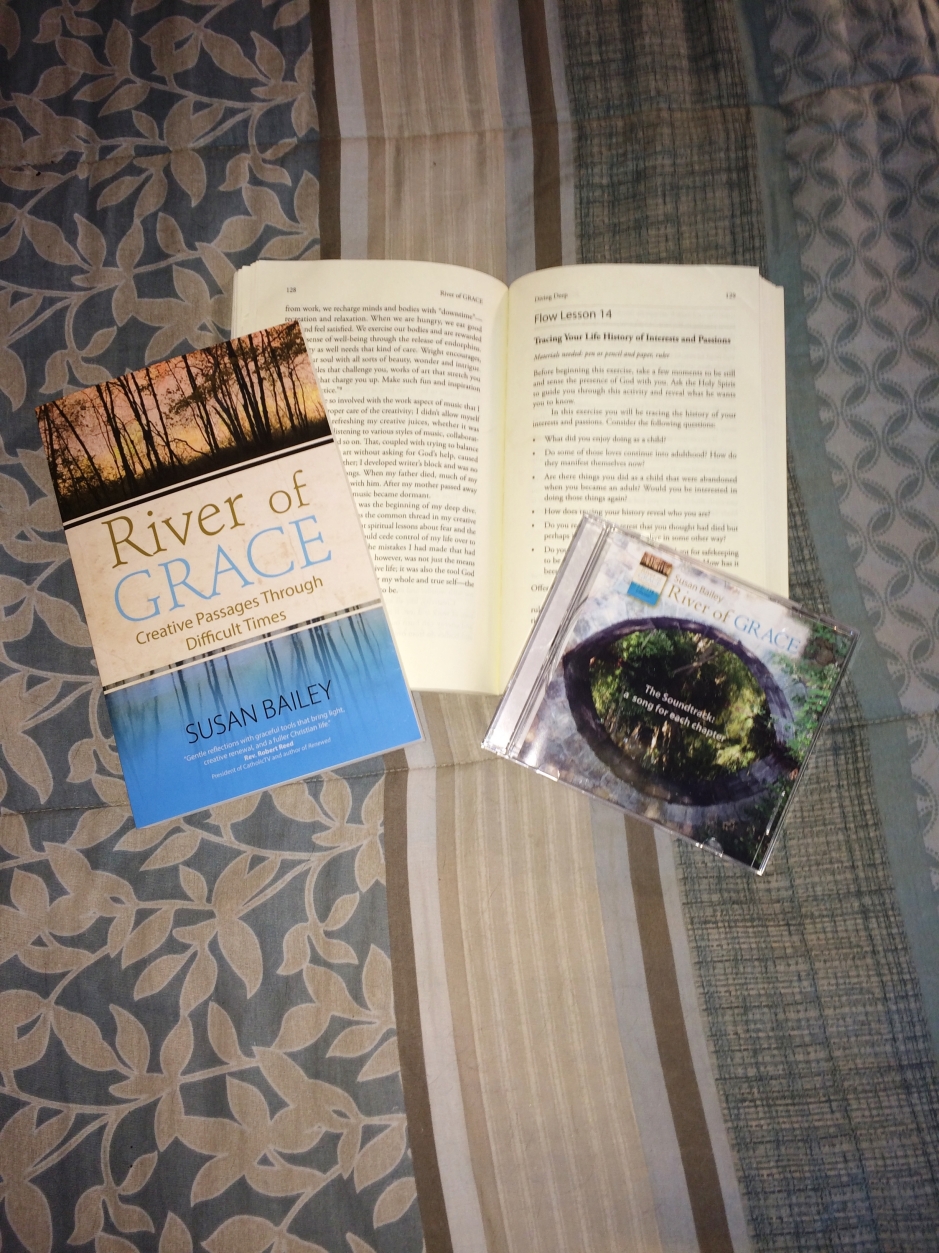
River of Grace: Creative Passages Through Difficult Times was my first book, written in 2015. In the book I reflect upon suffering in my life which included the deaths of my parents and the loss of my singing voice. By trusting in God even when I had no idea where He was leading me, I experienced transformation as a result of the creative power of grief.

River of Grace provides powerful personal stories of loss and grief along with creative ways to cope through trust and faith. It’s a book of hope during this difficult pandemic.

To give you a better idea of the nature of River of Grace, I invite you to watch/listen to a 40 minute presentation on the book which also includes some songs that amplify the meaning.

Where to order River of Grace

My publisher, Ave Maria Press, is holding a Labor Day Weekend sale — go to their website for 10% off the purchase price.

Visit www.avemariapress.com/products/river-of-grace.

A Special Bouquet for Carmen

Pure creativity is such a sacred time – love this post by my friend Brunhilde Luken.

susanwbailey's avatarBrunhilde Luken, artist and writer

It was an exciting wonderful summer day. My thoughts went back to the time when my children were little. Now they are all grown up with children and some grandchildren of their own. For a second, time stood still. In my mind I watched them play and giggle and laugh. They were so happy. Thankful to our Lord for being able to remember it all. I thought, “Today is a good day to paint a special bouquet.” As I started to play-paint, I truly felt this was my playtime.

I put a first layer on and washed it off, this was a perfect background. As I started to paint, I could picture this in my daughter Carmen’s kitchen. With so much love in my heart, my brushes moved over the canvas with such ease creating this beautiful bouquet of flowers. I knew God gave me this special gift for my…

View original post 357 more words

Recognizing the creative person within

I manage a blog for a dear friend with a beautiful heart. I just had to share her latest post with you. It reflects what I wrote in chapter 5 of my book, River of Grace, which describes a similar idea — that we are all called to create with what we have been given. To find that storehouse of creative energy, we must get in touch with our Creator who fuels that energy. My friend Brunhilde uses her creativity to inspire us to come closer to God. The beauty of her paintings and her words is a great way to start that movement towards the One who created our vast world, and us, out of nothing. We in turn, have all of his creation at our disposal to use towards bettering our world and drawing closer to each other in love.

Brunhilde has recommended a book that I will be ordering for myself soon.

I hope you enjoy this lovely reflection.

Psalm 42:2-3, “As the deer longs for streams of water, so my soul longs for you, O God. My soul thirsts for God, the living God. When can I enter and see the face of God.” When I created this painting I truly cried out to the Lord, not in sadness but in love to […]

via In Prayer and Meditation — Brunhilde Luken, artist and writer

Save

Susan’s latest CD, “Mater Dei” is now available!
Purchase here.

Many people find coloring to be a wonderful way to relax and experience harmony in their lives. Is that you? Join my Email List to subscribe to this blog and receive your free Harmony coloring book (and more).

River of Grace Audio book with soundtrack music available now on Bandcamp. Listen to the preface of the book, and all the songs.

Susan Bailey, Author, Speaker, Musician on Facebook and Twitter
Read my other blog, Louisa May Alcott is My Passion


Save

Save

Save

Save