Keeping the Spark: How to Nurture Your Child’s Love of Learning

Guest post by Julie Morris

Image via Freepik

Introduction

Every parent wants their child to love learning — to see curiosity as an adventure, not an assignment. But as kids grow, grades, screens, and social pressures can dim that natural spark. The good news? You can keep it glowing with simple, intentional habits that make learning feel joyful again.

TL;DR

  • Learning thrives on curiosity, not control.
  • Model a “learner’s mindset” — let kids see you exploring too.
  • Build environments rich with wonder, choice, and connection.
  • Celebrate effort, not perfection.
  • Stay flexible: curiosity looks different at every age.

The Hidden Ingredient: Curiosity Over Control

Kids are born question-askers. The challenge isn’t creating curiosity — it’s protecting it. Give them space to wonder, fail, and try again. If your child asks why the sky is blue, explore the answer together instead of Googling it immediately. Use moments like these to practice discovery, not just deliver information.

For example, the National Geographic Kids site offers bite-sized articles that spark curiosity without overwhelming them. Or try a STEM toy kit that makes learning tactile and hands-on.

Mini Checklist: How to Keep Curiosity Alive

  1. Ask, don’t lecture. Replace “Let me tell you” with “What do you think?”
  2. Praise process, not outcome. “You worked hard!” beats “You’re so smart!”
  3. Connect learning to life. Math at the grocery store; biology in the garden.
  4. Model lifelong learning. Let kids see you reading, tinkering, or taking courses.
  5. Limit passive screen time. Keep room for exploration, art, and outdoor play.
  6. Encourage reflection. Ask, “What did you discover today?”

Lead by Example: Learning Never Ends

Sometimes, the best way to inspire a love of learning is to live it yourself. Parents who keep growing show kids that curiosity isn’t just for school — it’s a lifelong superpower.

Whether you’re taking a pottery class, learning a new language on Duolingo, or exploring online degree options, kids notice. If you’re ready to level up your education, you can earn an MSN degree to expand your expertise in areas like nurse education, informatics, administration, or advanced practice. Programs like these make it easier to juggle school, work, and family life — and your commitment becomes a powerful example of perseverance.

The Difference Between “Teaching” and “Sparking”

Approach Teaching Sparking Curiosity
Focus Facts and outcomes Exploration and meaning
Parent role Instructor Co-learner, guide
Typical phrases “You need to study this.” “What do you notice about that?”
Motivation source External (grades, praise) Internal (interest, discovery)
Result Short-term memorization Lifelong love of learning

How-To: Make Everyday Moments Teachable

You don’t need flashcards or lesson plans. Ordinary life holds endless opportunities for learning — if you slow down enough to notice.

  • Cooking together → teaches math, patience, and chemistry.
  • Nature walks → explore local ecology, sketch plants, use a field guide app.
  • Music time → rhythm and melody build pattern recognition skills.
  • Storytelling → reading aloud develops empathy and vocabulary.

Even apps like Khan Academy Kids and PBS LearningMedia can complement curiosity when used as tools, not babysitters.

FAQ

Q: My child says school is boring. What can I do?
 A: Ask why. Maybe the pace is off or they crave hands-on projects. Try extending the topic at home — if they’re learning about planets, watch a NASA video or build a mini solar system.

Q: How do I motivate without pressure?
 A: Replace rewards with recognition. “I love how you kept trying!” builds internal motivation better than gold stars.

Q: What if I’m not ‘good’ at helping with homework?
 A: You don’t have to be a tutor. Be a teammate in the process — show them how to find answers, not just provide them. Use resources like CoolMath4Kids for playful learning.

Product Spotlight: Hands-On Learning Kits

One easy way to revive enthusiasm is through creative, tactile learning kits like Little Passports. These boxes introduce science, culture, and geography through stories and experiments. A few minutes a week can reawaken wonder in ways textbooks can’t.

Final Thoughts

Keeping the love of learning alive isn’t about being the perfect teacher — it’s about creating a world where curiosity feels safe, exciting, and endless. When kids see you learning with them, not at them, they realize knowledge isn’t a finish line. It’s an adventure that never stops.

Smart Moves: Budget-Friendly Home-Buying & Moving Tips for Families

Guest post by Julie Morris

Image via Freepik

Buying a new home is exciting, nerve-wracking, and often expensive—especially when kids are in the mix. But with a little planning and creativity, parents can make the process more affordable without sacrificing comfort or safety.

Key Takeaways

  • Get pre-approved and know your limits.
  • Budget for moving day (and the pizza afterward).
  • Reuse, recycle, and borrow before buying anything new.
  • Think beyond the house: location, schools, and utilities matter.
  • Keep kids engaged with creative moving-day “missions.”

1. Focus on Community First

When life feels divided between mortgage paperwork, moving boxes, and restless kids, take a cue from Be as One.

Bailey’s message is simple yet profound: all the pieces of your life — work, family, art, faith — can exist together in harmony. She writes about the “many pieces of a harmonious life” as gifts from God, not distractions from it. Even when things feel disjointed, unity can emerge through gratitude, creativity, and connection.

In the context of home buying and moving, that’s powerful advice. Your move doesn’t have to feel like a rupture; it can be a renewal. Treat each stage — decluttering, budgeting, packing — as part of one harmonious whole. When the process gets messy (and it will), remember Bailey’s reminder that “nothing is meant to be hidden away.” Every stressful moment and every small victory belong in your family’s shared story of growth.

So as you label boxes and compare mortgage rates, take a breath. This is not just a move — it’s one more step toward a unified, joy-filled home life.

2. Saving Money Without Sacrificing Sanity

Families can save thousands with a few smart adjustments. Try these ideas before calling the movers:

Budget Hacks for Parents

  • Negotiate everything — from realtor commissions to inspection fees.
  • Ask about first-time-buyer programs; many states offer tax credits or low-interest loans.
  • Buy used boxes from local listings instead of new ones.
  • Get creative with furniture transport. Sometimes renting a van for two days costs less than a moving service for one.
  • Plan your move mid-month—rates are lower when demand dips.
  • Compare moving service quotes on platforms like org and PODS.com.

3. Keep Kids Comfortable During the Transition

Moving is stressful for everyone, especially little ones. Turn the move into an adventure instead of an upheaval.

Age Group How to Help Them Cope Budget-Friendly Trick
Toddlers Keep one familiar “comfort box” of toys nearby. Use reusable bins instead of cardboard—no repurchasing later.
School-age Kids Give them “packing missions” (like labeling rooms). Offer small rewards—stickers or treats, not gadgets.
Teens Let them design their new room layout. DIY decor using thrift-store finds or repainting instead of refurnishing.

4. Smart Financial Move: Protecting What You Just Bought

Homeownership brings peace of mind — until a furnace fails or a washing machine gives up. That’s where exploring home warranty options available makes sense.

A home warranty is a customizable annual plan that covers repairs or replacements for key systems and appliances, helping you manage costs from normal wear and tear. It’s not glamorous, but it can save thousands and keep family life running smoothly.

5. The Family Home-Buying & Moving Checklist

Before You Buy

  1. Review your credit report on AnnualCreditReport.com.
  2. Get pre-approved with at least two lenders to compare offers.
  3. Set a “must-have vs. nice-to-have” list with your partner and kids.

Before You Move

  1. Declutter—donate, sell, or recycle unused toys and clothes.
  2. Book movers early or rent a van before peak dates.
  3. Transfer utilities and confirm your change of address.

After You Move

  1. Deep-clean before unpacking—especially high-touch areas.
  2. Walk the neighborhood with your kids to explore local parks.
  3. Host a “snack night” picnic to meet your new neighbors.

6. Product Spotlight: Smart Packing Essentials

Families often forget one item that can save headaches: reusable vacuum storage bags. They keep clothes fresh, compress bedding, and save half your car space. Try affordable versions from IKEA, Target, or Amazon Basics. For parents juggling boxes and bedtimes, they’re a small miracle.

7. Quick FAQ

Is it better to buy a fixer-upper or move-in ready home when on a tight budget?
If you have reliable local contractors and time, a mild fixer-upper can be a smart choice. Just set aside at least 15% of your budget for unexpected repairs.

How can parents minimize stress for kids during a move?
Give them agency. Let them decorate boxes or design their new room virtually.

Should I buy new furniture right away?
Wait 30–60 days. Live in the space first; you’ll save by understanding what you need.

8. Glossary

  • Equity – The portion of your home you truly own, based on its market value minus any mortgage balance.
  • Closing Costs – Fees paid at the end of the home-buying process, including title, inspection, and loan charges.
  • Contingency – A condition in a real estate contract that must be met before the sale is finalized.
  • Pre-Approval – A lender’s written estimate of how much you can borrow for a mortgage.
  • Home Warranty – A service contract covering repair or replacement of major home systems and appliances.

Conclusion

Home-buying with kids can feel like a marathon of lists, boxes, and emotions, but with smart planning, it becomes a shared family journey—not just a transaction.

Focus on community, comfort, and creativity, and you’ll find your new home is more than an address—it’s where your family’s next chapter begins.

Reset Refreshed: Self-Care Activities That Help Kids Recenter Without Screens or Struggle

Guest post by Julie Morris
Image via Pexels

Kids absorb more tension than we notice, and without a way to release it, that energy turns inward. Their behavior isn’t random—it’s often a signal of overload. Resetting doesn’t always mean resting. It can mean moving, scribbling, sorting, or staring into space without demand. They don’t need fixing. They need frictionless ways to come back to themselves.

Get Outside: Let the World Be Quiet for a Minute

Nature offers something your house can’t: silence that moves. Kids don’t always need a parkour-style sprint to reset—they need trees that don’t need them, grass that sways on its own timeline. Researchers describe the fascination in green spaces as “soft,” not because it’s weak, but because it gently pulls attention outward. The effect isn’t instant, but give it 15 minutes. Sit under a tree. Don’t schedule it. Just let their senses track birds, wind, and uneven ground. A child who’s been sprinting mentally all day doesn’t need more tasks—they need frictionless wonder. And green space delivers that with no passwords and no parental performance pressure.

Save the Masterpieces Without the Clutter

Those finger paintings? The handprint turkeys? The drawing of your dog with six legs? They mean something. But they pile up fast. Instead of letting them vanish in the bottom of a junk drawer, consider archiving them. Saving artwork as a PDF creates a digital keepsake that can be shared with family or preserved for years without the physical clutter. You can check this one out — a free tool that lets you drag and drop scanned files, turning them into clean, easy-to-store digital copies.

Give Them a Journal

When kids put thoughts to paper—whether they’re writing, doodling, or scribbling emoji-style faces—they’re externalizing emotion, organizing inner noise, and making space for new thoughts to come in. You don’t have to read it. In fact, you probably shouldn’t. This is about ownership. One page a day. No rules, no grades, no “draw a rainbow with six colors” worksheets. Just paper and pen. Over time, they may write more. They may not. Either way, the practice of recording daily scraps of thought or image creates a self-care groove they’ll carry into teenhood. It’s simple and surprisingly effective: a journal provides emotional space when conversation feels too heavy or fuzzy.

Encourage Freeform, Unstructured Play
(and Walk Away)

Not all rest looks restful. Sometimes the reset comes from more movement—but only if they’re the one in charge. Let them build with couch cushions, dress dolls in winter hats, or turn the hallway into a dinosaur habitat. It might look chaotic to you, but this kind of child-led play gives their nervous system a chance to work through big feelings without adult framing. The key is that it’s theirs. No objectives. No prize. Just raw creation. When a child can invent, destroy, and rebuild their own world, they’re also processing the one around them.

Let Art Slow the Pulse

Paint. Markers. Stickers. And a table that doesn’t ask questions. Art isn’t just cute output—it’s often the first time a kid externalizes a tangled emotion they couldn’t name. When you invite mindful drawing—not “make a tree,” but “draw whatever your hand wants”—you’re giving their body permission to lead the mind. This isn’t about creativity; it’s about calming through sensation. Studies show that creative focus through art can steady breathing and attention span, especially in kids who struggle to articulate stress. Keep a small bin of materials in reach, but not on display. This should feel like relief, not an assignment.

Movement That Isn’t a Sport

Not every kid wants a team jersey. Some just need to stretch, roll, tumble, or march around the backyard with their arms out like helicopter blades. Movement shouldn’t always mean drills or lessons—it can be wiggly, weird, or quiet. A good physical reset meets a child’s energy exactly where it is, then helps it shift. If they’re sluggish, try a skipping game. If they’re buzzing, lead them in slow, deliberate stretches. It’s not a workout. It’s an exhale. Daily movement improves kids’ mental clarity and emotional regulation more than most parents realize. The trick? You have to let them move like themselves—not like tiny gym members.

Kids don’t reset on command. But they do respond to rhythm, sensory space, and moments where they aren’t being asked to perform. These resets aren’t tricks. They’re tools—honest, repeatable, and quiet enough to let their systems breathe. When they know how to return to stillness, they don’t just feel better. They grow steadier. And steadiness is the soil where everything else grows.

Discover a world of inspiration and self-care at Be as One, where you can explore resources to elevate your wellness journey and embrace a more connected, creative life.

Be sure to visit Julie’s website at juliemorris.org.
Susan Bailey, Author, Speaker, Musician on Facebook and Twitter
Read my other blog, Louisa May Alcott is My Passion

amazing grace album cover
NEW MUSIC!
Susan’s
new release, Amazing Grace” is now available!
Available on Amazon, Spotify, iTunes and YouTube

00 cover smalllouisa cover smallimaginary-heroes_cover
Purchase Susan’s books.

River of Grace Audio book with soundtrack music available now on Bandcamp.
Listen to the preface of the book, and all the songs.

How Families Can Invest in Their Overall Self-Care

Guest post by Julie Morris

Image via Freepik

Families are at their strongest when everyone feels healthy, grounded, and cared for. Yet between school drop-offs, packed calendars, and the daily grind, self-care can slip quietly into the background. It doesn’t have to. When families treat self-care as a collective priority — not just a personal indulgence — it becomes a way to deepen connection, reduce stress, and model resilience for kids. Here’s how you can make that shift, with actionable ways to start today.

Strengthening Bonds Through Movement

Nothing clears a room of tension like shared motion. Family walks after dinner, a bike ride on a Sunday afternoon, even an impromptu dance party in the living room — it’s less about the calories and more about the emotional release. Studies show kids mirror their parents’ habits, and adults benefit emotionally when you work out together. The energy shifts. Laughter comes easier. Suddenly, the idea of self-care feels less like an errand and more like a ritual everyone looks forward to.

Choosing the Right Supplements

As families aim to fill nutritional gaps and feel more energized, supplements can be a smart part of the equation. But it’s important to pick products that align with your values — clean, easy to use, and kid-friendly where possible. If you’re looking for helpful solutions, this is a good one to keep on hand as part of a well-rounded self-care approach. Taken daily, it can become one more small but meaningful way to invest in your family’s collective well-being.

Taking a Break from Screens

When was the last time your family sat in silence without a device in sight? It feels almost radical now, but it’s worth it. Even a single evening unplugged can shift the mood and open space for real conversation. One family described the difference a weekend screen-free reset made in reconnecting with their teens — the awkward silence gave way to stories, games, and even spontaneous plans. That kind of reset costs nothing yet pays off in presence, attention, and trust.

Investing in Yourself Without Guilt

Too many parents frame spending on wellness as a luxury. It’s not. Setting aside dollars for yoga, therapy, healthy food, or creative hobbies sends kids a powerful message: your well-being deserves a line item in the budget. A smart way to start is by building a wellness budget that factors in both short-term needs and long-term habits. Even a modest allocation each month can reduce guilt, prevent burnout, and keep you from sacrificing your health to everyone else’s demands.

Eating Well Without Overcomplicating It

For all the talk about superfoods and meal plans, family nutrition comes down to rhythm and intent. Keep it simple, keep it consistent, and keep it joyful. Start small — one or two weeknight meals everyone can count on, where vegetables and conversation are equally important. Parents who prioritize daily family meal routines find that kids pick up healthy eating patterns faster and resist less because they see it modeled. A stocked fruit bowl and a plan for who sets the table can work wonders.

Adding Layers of Calm

Sometimes the best thing a family can do is… pause. You don’t need a meditation app or a retreat to find your breath. Even five minutes sitting together, eyes closed, focusing on nothing but inhale and exhale, can shift a hectic evening into something quieter. One hospital recommends five-minute shared breathing exercises to help families cope with anxiety, proving how little time it really takes to recalibrate. It’s grounding, it’s free, and it builds resilience you can feel.

Building a Wellness Budget That Sticks

It’s easy to lose track of spending when it comes to “self-care splurges,” but intentional budgeting can turn impulse into strategy. A family that sets clear priorities — and ties those to specific financial actions — feels less conflict and more clarity when the credit card comes out. One parent said that by prioritizing wellness spend they finally stopped second-guessing whether to book the dentist, the therapy session, or the weekend away. It became an investment, not an indulgence.

Self-care doesn’t happen in isolation. When families treat it as something shared, it becomes easier — and much more powerful. Every moment you carve out for yourselves strengthens the foundation you all stand on. You don’t have to get it perfect. Start with what feels manageable, celebrate small wins, and keep going. It’s not just about feeling better today; it’s about teaching the next generation that they deserve care, too. And that lesson? It sticks.

Discover a wealth of resources and inspiration for personal growth and well-being at Be as One, where faith and creativity unite to help you live the life you truly desire!

Be sure to visit Julie’s website at juliemorris.org.
Susan Bailey, Author, Speaker, Musician on Facebook and Twitter
Read my other blog, Louisa May Alcott is My Passion

amazing grace album cover
NEW MUSIC!
Susan’s
new release, Amazing Grace” is now available!
Available on Amazon, Spotify, iTunes and YouTube

00 cover smalllouisa cover smallimaginary-heroes_cover
Purchase Susan’s books.

River of Grace Audio book with soundtrack music available now on Bandcamp.
Listen to the preface of the book, and all the songs.

00 harmony color book featured imageMany people find coloring to be a wonderful way to relax and experience harmony in their lives. Is that you? Join my Email List to subscribe to this blog and receive your free Harmony coloring book (and more).

Save

Conquering Stress: A Modern Guide to Achieving Balance and Harmony

Guest post by Julie Morris

In today’s fast-paced world, especially during the holiday season, stress can become an overwhelming presence. The added pressures of holiday planning, family gatherings, and financial concerns often intensify our usual stressors. This article, brought to you by Be as One, is designed to not only identify the common and holiday-specific sources of stress but also to provide effective strategies to manage it. We will explore how to navigate through the festive chaos with ease, ensuring a more joyful and relaxed holiday experience, along with overall well-being for a happier, healthier life.

Learn Your Stress Triggers

Identifying the causes of stress involves uncovering often overlooked factors like work pressures, personal relationships, financial worries, and health concerns. This recognition acts as a crucial first step in combating stress, illuminating hidden triggers. Armed with this knowledge, you can strategically tackle stress, moving from guesswork to targeted action.

Embrace Regular Physical Activity

Regular exercise goes beyond physical health, serving as an effective tool for stress relief through the release of endorphins, nature’s mood enhancers. Incorporating at least 30 minutes of enjoyable activities like walking, cycling, or dancing into your daily routine can significantly lift your spirits. This form of physical engagement not only boosts physical wellness but also operates as a natural antidepressant, making it a vital component in managing stress.

Nourish the Body and Mind

Improving your diet plays a critical role in stress management. Foods rich in nutrients fortify your body against the ravages of stress. Fruits, vegetables, whole grains, and lean proteins offer fuel for your stress-fighting engine. On the flip side, limit caffeine and sugar, as they can amplify stress and anxiety. Consider your diet as a palette from which you can paint a more stress-resistant lifestyle. It’s not just about eating; it’s about nourishing both body and mind.

Go Back to School

Sometimes, stress is our mind’s way of telling us that we aren’t doing what we’re supposed to be doing. So if you’re thinking about a career change, going back to school is a great place to start! Online programs in particular offer a great deal of flexibility, and there are plenty of degrees to choose from. For instance, if you’d like to be a nurse, you could pursue an RN to BSN online, gaining valuable knowledge you need to get ahead.

Balance Professional and Personal Worlds

Establishing work-life balance is essential in our always-on world. This balance is not a luxury; it’s a necessity. Setting clear boundaries between work and personal time is key. Dedicate time for relaxation and hobbies that rejuvenate your spirit. Remember, no job is worth sacrificing your mental and emotional well-being. In this balancing act, prioritize yourself; it’s the only way to sustain your productivity and happiness in the long run.

Cultivate Positivity

Maintaining a positive attitude is a cornerstone of stress management. It’s about focusing on solutions, not problems. Practice gratitude daily; it shifts your perspective from what’s going wrong to what’s going right. Surround yourself with people who uplift you. A positive mindset doesn’t just reduce stress, it also attracts more joy and success into your life. It’s a self-fulfilling prophecy: the more positivity you emit, the more you receive.

Restore Yourself with Rest

Getting enough sleep is crucial for rejuvenation. Quality sleep is as vital as food and water for our well-being. Establish a relaxing bedtime routine to signal your body it’s time to wind down. Create a sleep environment that’s conducive to rest: cool, quiet, and comfortable. This restorative process is your body’s time to heal from the day’s stresses, preparing you for the challenges of tomorrow.

Mindfulness and Meditation

Practicing deep breathing and meditation are keys to inner peace. These practices bring a sense of calmness, helping you to navigate life’s storms with a steadier hand. Integrate them into your daily routine, even if it’s just for a few minutes. This commitment to mindfulness is an investment in your mental and emotional bank account, offering rich dividends in stress reduction and overall well-being.

Explore Alternative Relief Methods

In the quest for balance and harmony, exploring various alternative therapies can be a transformative journey. These therapies often focus on healing the body and mind holistically. Here are a few that have gained popularity:

  • Acupuncture: This ancient Chinese therapy involves inserting thin needles into specific points on the body. It’s believed to correct imbalances in the flow of energy (Qi), thereby promoting relaxation and healing. Acupuncture is widely used for pain relief, stress management, and even for chronic conditions like migraines and arthritis.
  • Aromatherapy: Aromatherapy uses essential oils extracted from plants to enhance physical and emotional health. Each oil has unique properties and can be used in various ways, such as in diffusers or for topical application. Lavender, for example, is noted for reducing anxiety, boosting mood, and aiding in better sleep.
  • Reiki: Reiki is a Japanese technique for stress reduction and relaxation. Practitioners believe in channeling universal energy through their hands to the recipient, fostering emotional or physical healing. It is often sought for its ability to impart a deep sense of peace and well-being, often complementing traditional medical treatments.
  • Tetrahydrocannabinolic Acid: THCA is a non-psychoactive compound found in raw and live cannabis. Unlike THC, it doesn’t produce a ‘high’ but is researched for its potential therapeutic benefits. It has been associated with anti-inflammatory and neuroprotective properties, making it a subject of interest for treating various health conditions. Be mindful when purchasing THCA that you find a reputable source.

Navigating stress in today’s hectic world, particularly during the holiday season, is an evolving process that demands self-awareness and dedication. The holiday period, with its unique blend of joy and stress from planning, family dynamics, and financial demands, adds another layer to this challenge. However, by pinpointing both everyday and holiday-specific stressors and applying the strategies discussed, you can steer towards a more balanced and joyful existence. Keep in mind, effective stress management, especially during these festive times, is crucial for your overall well-being. Prioritizing it not only during the holidays but throughout the year is key to a healthier, more rewarding life.

Photo courtesy of Pexels.

Be as One is here to help you get the harmonious life you deserve. Questions? Don’t hesitate to reach out!
You can find out more about Julie Morris at juliemorris.org.

Susan Bailey, Author, Speaker, Musician on Facebook and Twitter
Read my other blog, Louisa May Alcott is My Passion

amazing grace album cover
NEW MUSIC!
Susan’s
new release, Amazing Grace” is now available!
Available on Amazon, Spotify, iTunes and YouTube

00 cover smalllouisa cover smallimaginary-heroes_cover
Purchase Susan’s books.

River of Grace Audio book with soundtrack music available now on Bandcamp.
Listen to the preface of the book, and all the songs.

00 harmony color book featured imageMany people find coloring to be a wonderful way to relax and experience harmony in their lives. Is that you? Join my Email List to subscribe to this blog and receive your free Harmony coloring book (and more).

Save

Yearning for perfection, longing for home

Note: This month’s column for the Catholic Free Press.

A couple of weeks ago our family and friends gathered to give our daughter Meredith a bridal shower. We had the entire first floor of the Asa Waters mansion in Millbury for the event. Tables were set up in the gracious hall, food was served in the elegant dining room, and drinks were offered in an adjoining room. Gifts were displayed on the winding staircase.

The theme of the shower was Harry Potter, brilliantly executed by Meredith’s matron of honor, Roxanne, and her bridesmaids. For our entertainment there were games and a photo booth with a glittery gold backdrop; masks were provided to don for comical photos, many of which were posted on Facebook pages.

Meredith and her finance Jimmy opened the many gifts and were overwhelmed by the generosity and thoughtfulness of their family and friends.

The whole affair was perfection. All I wanted to do when it was over was to relive the day again and again.

Yet I had an odd reaction of sadness after the shower. It felt very similar to the days when both the children moved out of the house for good leaving a void that would never again be filled. As on those days, I went to Meredith’s room and had a good cry.

In reflecting upon those emotions I thought about other momentous occasions in my children’s lives. The day they were born. Their first day in kindergarten. School plays. Graduation from high school, and then college. Meredith’s engagement. Important days to be sure. And yet, none of those days conjured up the sadness and yearning I felt after the bridal shower. Why was that?

Perfection in life is rare, one might even say impossible. You recognize it when you are living in a perfect moment and you know it is something that will never happen again. It is fleeting; it cannot be held onto or possessed. It is to be lived only to slip away out of our grasp. We are left with the shadow of a fading memory.

And it occurred to me that I was mourning the loss of perfection. For three hours I was able to experience it only to have it end. Things of this world are temporary; everything decays and dies.

I began to wonder how Adam and Eve felt after leaving the Garden of Eden—did they mourn their loss of perfection? During His time on earth, did Jesus long for home? Did He too experience times of melancholy and yearning, remembering his existence of perfection?

We were meant for perfection; created in the Garden of Eden we were destined to live in sublime harmony with our Heavenly Father. Somewhere along the way we were misled into thinking perfection meant being God rather than being with God.

And now we are left with the shadow of the memory of perfection. And once in a great while, we taste it, reminding us perhaps of we had lost in our arrogance. We mourn the loss, we hunger for home, we yearn for what we were meant to be.

The words of St. Augustine are true: “Our hearts are restless until they rest in you.”

Meredith’s bridal shower was a gift of grace, a moment to remind me of what perfection can be like. And why it is worth enduring life’s trials in faith to reach that final goal of perfection—the reunion with God which will last for all eternity. Only then will our restless hearts be satisfied.


Save

Save

Save

Click to Tweet & ShareYearning for perfection, longing for home http://wp.me/p2D9hg-1X4

em space


just-cover-225x222


Susan’s latest CD, “Mater Dei” is now available!
Purchase here.

Many people find coloring to be a wonderful way to relax and experience harmony in their lives. Is that you? Join my Email List to subscribe to this blog and receive your free Harmony coloring book (and more).

River of Grace Audio book with soundtrack music available now on Bandcamp. Listen to the preface of the book, and all the songs.

Susan Bailey, Author, Speaker, Musician on Facebook and Twitter
Read my other blog, Louisa May Alcott is My Passion


Save

Save

Save

Save

From the pen of an empty-nester: The season of comings and goings

NOTE: This is my upcoming column in the Catholic Free Press (for Friday, January 13) and it is currently running on Catholicmom.com.

Before I share my column, a few words.

It’s been a while since I’ve written regularly for this blog and this is because I am involved in a mammoth writing project which you can find out more about here.

from http://nextcenturypublishing.com/

This is the book I was working on when I was offered the opportunities of River of Grace and Louisa May Alcott Illuminated by The Message; these works (thanks to excellent editors and publishers) taught me how to write professionally, making this new book possible. It is the work of my heart, the book of my life. And it being all consuming, it’s been difficult keeping up with my two blogs.

A new direction for this blog

While prepping for River of Grace, I read a book of essays about the adjustment to an empty nest (I had originally intended to include a chapter on that subject). In writing for Catholicmom I thought I might focus on being an empty-nester as I have many thoughts on this stage of life; I will share those columns here as well.

rpphotos I'm beginning to feel the empty nest syndrome, Flickr Creative Commons
rpphotos I’m beginning to feel the empty nest syndrome, Flickr Creative Commons

My first column, “The Season of Comings and Goings”, was published this week on Catholicmom and I invite you to read it:

Another Christmas has come and gone. The tree is outside on the deck for the birds to enjoy; the wreath, brown and dry, is feeding the soil on the other side of the fence.

All the lights are wrapped up (with their extension cords this time!) and put away.

And the letdown after Christmas begins. Every ornament carefully placed in the box, each stocking taken down reminds me of the family time I still crave and so cherish.

manger

Continue reading …


Save

Save

Save

Save

Save

Save

Click to Tweet & ShareFrom the pen of an empty-nester: The season of comings and goings http://wp.me/p2D9hg-1Q1

em space


just-cover-225x222


Susan’s latest CD, “Mater Dei” is now available!
Purchase here.

Many people find coloring to be a wonderful way to relax and experience harmony in their lives. Is that you? Join my Email List to subscribe to this blog and receive your free Harmony coloring book (and more).

River of Grace Audio book with soundtrack music available now on Bandcamp. Listen to the preface of the book, and all the songs.

Susan Bailey, Author, Speaker, Musician on Facebook and Twitter
Read my other blog, Louisa May Alcott is My Passion


Save

Save

Save

Favorite toys, family memories, blessings remembered … what did you get for Christmas?

I loved Christmas as a kid.

Like all kids I’d be up half the night, listening to the activity down in the living room where my dad would be putting together a bicycle or building some other contraption. He’d sometimes ring the jingle bells that hung on our front door because he knew my sister, brother and I were listening; we swore Santa was on our roof with his sleigh full of toys! My older sister would peak down the stairs to spy.

It was such a long wait until 6am when we would run downstairs to open our gifts.

I have fond memories of toys from Christmas past. Among my favorites:

doll and dollhouseSuzy Smart, a talking schoolgirl doll

A magnetic dollhouse – the magnets were on wands and I used to love whipping the family members through the house!

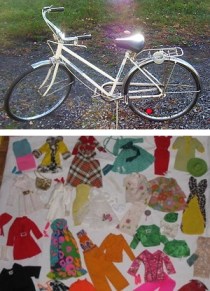
bike and clothesMy first 26 inch bicycle

Barbie clothes, especially the ones my cousin Janie made for me. The white levis were the coolest!

All the cute nature-related stocking stuffers – they were the best!

christmas morningHere’s what we looked like on Christmas morning – my dad could never resist taking a picture and as you can see, we were just thrilled:

When we were a little older, we were required to wait until our grandparents came over before gifts could be opened. Sometimes they wouldn’t arrive until two in the afternoon; that’s a long wait for a kid! I managed to take satisfaction in the fact we still had gifts to open while the rest of the kids in the neighborhood had long ago opened theirs.

Christmas becomes quieter as we grow older  …

although sharing it with small children keeps the magic alive. My husband bought and put together a huge Brio train set for our then one year old son; he ended up playing with the box!

brio trains

But now at 27, he keeps that box of wooden tracks and trains under his old bed at our home to keep for future generations.

Christmas these days is tinged with a bit of melancholy,

remembering parents and other beloved family members who have passed on. This year’s holiday was especially poignant with the thought of my older sister Christine and her husband Tom soon moving down south for their retirement.

We enjoyed a lovely last get-together at their home sharing mementos and memories.

The gathering was intimate: just Christine and Tom, our own family of four and older brother Tommy. Christine set the table with the silver, delicate white tablecloth, cloth napkins and embroidered place mats belonging to our maternal grandmother. Dinners in their Tudor dining room, complete with leaded windows, and a curved entrance with a wrought-iron gate, were formal; this dinner was warm as we each shared something we were grateful for before eating.

Upon opening presents we each received a precious remembrance of past loved ones.

Christine and Tom had recently cleaned out their attic and decided to distribute family mementos. I received my mother’s diploma from Wellesley College along with a special poem and remembrance from her retirement in 1984 from the Botany Department at the college.

Tommy received plans, drawings and photos of miniature ships that our paternal grandfather, known as Pom Pom, had built. We all marveled at the incredible precision and accuracy of the drawings and models; I knew that talent had passed down from grandfather to father to son and felt proud. Here’s a sample drawing from our “Pom Pom” of his 1912 car:

pom pom's car

The day ended quietly and once home,
I indulged in my favorite Christmas present this year,

daktarisent by my brother-in-law and his wife who live an hour outside of Los Angeles. They gave me a DVD of the complete first season of Daktari, a children’s TV show that I loved as a kid (from Wikipedia: The show follows the work of Dr. Tracy, his daughter Paula and his staff, who frequently protected animals from poachers and local officials. Tracy’s pets, a cross-eyed lion named Clarence and a chimpanzee named Judy, were also popular characters.).

It was particularly special that it came from Tim for he loves old TV shows and collects autographs and memorabilia. We had visited them over the summer and Tim and I had talked about favorite TV shows. It touched my heart that he remembered and I literally squealed when I tore off the paper and saw his gift.

So for a little while I became 10 years again, pretending I was Daktari’s daughter, living in Africa taking care of and communing with the animals (especially the big cats!).

Christmas Day was magical again.

But most importantly, thoughts of the baby Jesus and His birth into my life and so many others was never far from my mind. I was pleased to light all four of my advent candles for dinner with our son just before Christmas:

advent wreath with votives

A lovely tabletop tree highlights the manger scene:

manger

Magical, yes. And blessed. Merry Christmas!

How was your Christmas? What were your favorite toys from Santa?

Click to Tweet & Share: Favorite toys, family memories, blessings remembered … what did you get for Christmas? http://wp.me/p2D9hg-kF

Would you like to learn along with Susan how to live your life
in single flow?
Send an email to susanwbailey@gmail.com
to subscribe, and never miss a post!
Follow Susan on Facebook and Twitter
Listen to Susan’s music Read Susan’s blog, Louisa May Alcott is My Passion