

 Emily Dickinson and the Art of Belief by Roger Lundin
My rating: 5 of 5 stars
I knew nothing about Emily Dickinson before reading this book. Now I feel like I have a good running start. As the title suggests, Roger Lundin sets the book against the backdrop of the religious, political and social events of the times and the extraordinary changes that took place in all those areas throughout the 19th century. Despite the fact that Dickinson was an avowed recluse, she was profoundly affected. Despite seeing people on very rare occasions, she read voraciously, kept up with current events and most importantly, carried on many intimate correspondences by letters with dear friends over years, both men and women. Considered an enigma by many, she left behind an incredible legacy of words through her poetry and letters.
Admittedly I am completely dense when it comes to poetry. Despite the fact that I have written song lyrics, I just don’t understand poetry. And here I choose the most difficult of them all to read! But Emily Dickinson is also considered one of the greatest.
Lundin’s book was a page turner for me. I knew I was hooked the moment I whipped out my pencil and started my customary conversation with this book. Many underscores and notes later, I am sad that my read is over.
As I had hoped, he devoted a chapter to examining some of the poetry she wrote during her most prolific period which aided greatly in my understanding. Against the backdrop of the Civil War for which she had little first-hand contact save the death of friends and neighbors who fought, she fought her own war within herself, a great turmoil that produced her most brilliant work.
I was most fascinated by her seclusion and how many in her own family accepted it as normal to her character. Her sister-in-law Susan wrote in her obituary the following which I think sums it up perfectly:
“Like a magician she caught the shadowy apparitions of her brain and tossed them in startling picturesqueness to her friends … who fretted that she had so easily made palpable the tantalizing fancies forever eluding their bungling, fettered grasp.” (pg. 265)
From Lundin’s description of Dickinson I got the impression that she fashioned her life exactly as she wanted it. She saw her limited options as a mid-19th century woman and made her choices. She was indeed fortunately to have family members, especially Lavinia (“Vinnie”) protecting that choice and allowing her to live it even if they did not begin to comprehend Emily’s genius.
I can’t say that I can now go and read Dickinson’s poetry and “get it.” But I can certainly try. I can also visit her home in Amherst which is only an hour or so away from me.
How I do love living in New England!
Susan’s latest CD, “Mater Dei” is now available!
Purchase here.
-
Many people find coloring to be a wonderful way to relax and experience harmony in their lives. Is that you? Join my Email List to subscribe to this blog and receive your free Harmony coloring book (and more).
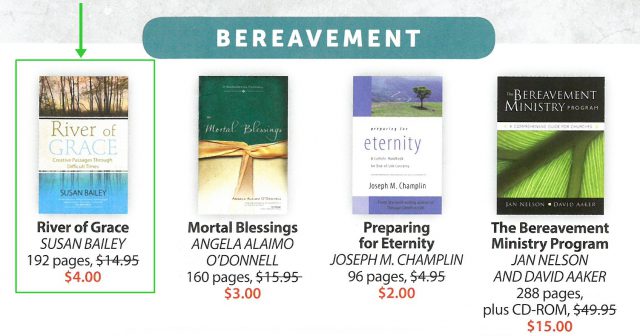
River of Grace Audio book with soundtrack music available now on Bandcamp. Listen to the preface of the book, and all the songs.
Susan Bailey, Author, Speaker, Musician on Facebook and Twitter
Read my other blog, Louisa May Alcott is My Passion
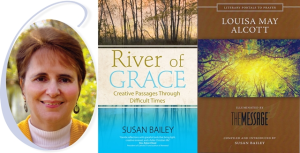

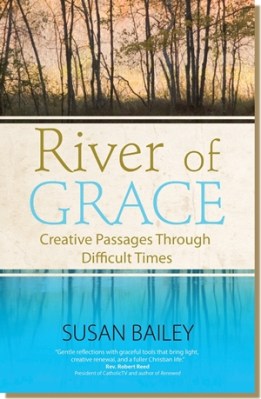 In this wonderful podcast known as Among Women, Pat Gohn and I discuss the themes of my book,


 And thus was born
  Jill Pickford is not only a marvelous writer but a terrific illustrator. Several of the stories are graced with her simple drawings which embody the spirit of the book.









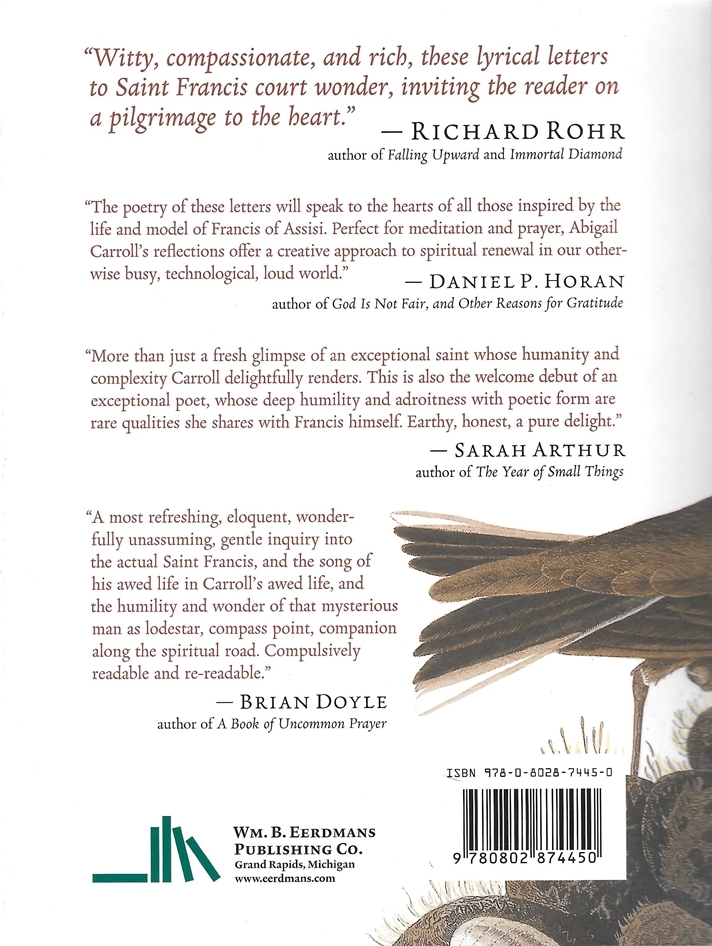 Carroll offers a brief biography of the life of St. Francis of Assisi which is helpful when reading the letters that follow. He was born around 1181, the son of a wealthy Italian cloth merchant. He was expected to follow his father into the family business but instead became a French troubadour. Eventually he chose to become a knight and joined the Fourth Crusade. That plan was thwarted the very first night by a disturbing dream which drove him back to Assisi in shame. Over the course of time he abandoned his wealth and adopted a life of poverty, caring for lepers and rebuilding the church (sometimes literally). An order of friars grew around him along with a sister community led by St. Clare of Assisi.

 Be as One